Media Room

/ and / Featuring Dr. Sam Wasser and Archive Footage and Project Consultation from Michael Harris, Baby Wild Films

PRINT NEWS HIGHLIGHTS / Click Here to Go To TV NEWS HIGHLIGHTS
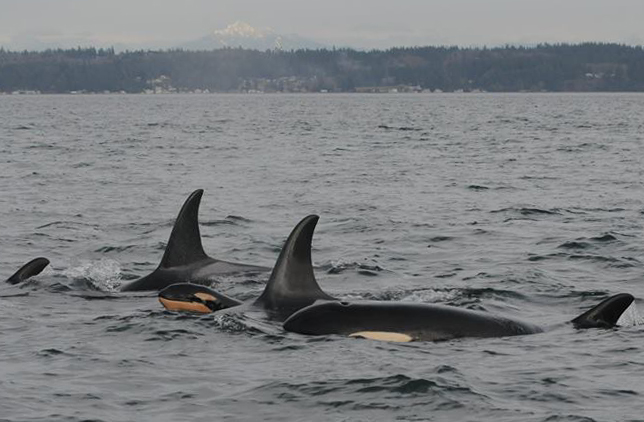
Good news, bad news... (above) J55, the newest calf in the Southern Resident Community, spotted January 18th, 2016 by NOAA Fisheries scientists. The crew also discovered that day a 20-year-old female of the population with her dead calf at the surface. It would've been J31's first baby.
"Hearing that she was pushing around this dead calf was heart-wrenching," said Michael Harris, Executive Director of Pacific Whale Watch Association. "It’s almost as if she wanted so much to be a part of this baby boom, to become a mother like so many in her pod, that she simply couldn’t bring herself to the bitter reality of losing her calf. "
“I guess we all have to be aware of reality — this population has turned a corner, no question, but in no way is it out of the woods. We’ve got some tough salmon years ahead of us, and that means extra pressure on the whales,” Harris said.
/ Canada Journal / January 20, 2016
/ Victoria Times Colonist / January 19, 2016
/ Ben O'Haraon, CHEK News / January 19, 2016
/ Vancouver Sun / January 19, 2016
/ Associated Press and KING 5 News (NBC Seattle) / January 19, 2016
/ Jack Knox, / Victoria Times Colonist / January 9, 2016 (see our Media Room for previous stories on this tidal turbine project, the siting of which was opposed by PWWA, the treaty tribes of Washington State, Orca Conservancy and other organizations.)
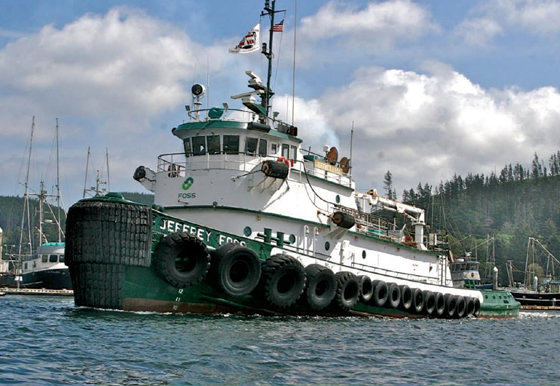
All hail, the Jeffrey Foss! The Southern Resident orcas thank you.
/ Rob Ollikainen, / Peninsula Daily News / January 6, 2016
Lisa Brooks, KUOW FM (NPR Seattle) / December 17, 2015
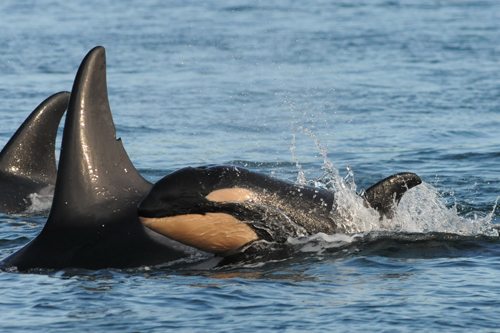
Welcome J54! The calf was spotted in early December by Pacific Whale Watch Association crews and confirmed on Wednesday the 16th. This is the eighth baby orca born into the endangered Southern Resident Community since December 30th, 2014. Photo by Dave Ellifrit, Center for Whale Research.
/ Jim Donaldson, Editor, Bellingham Herald / December 17, 2015
/ Jennifer Sullivan, Seattle Times / December 17, 2015
/ Ben O’Haraon, CHEK News / December 16, 2015
/ Phueong Le, Associated Press / December 16, 2015
THE BABY BOOM CONTINUES! Introducing L123 (below), the seventh calf born into the endangered Southern Resident killer whales since December 30th, 2014. Photo by Capt. Mark Malleson of Prince of Whales Whale Watching, under Department of Fisheries and Oceans (DFO) Canada license #2013-04 SARA-272 “3” and NMFS Permit #15569.
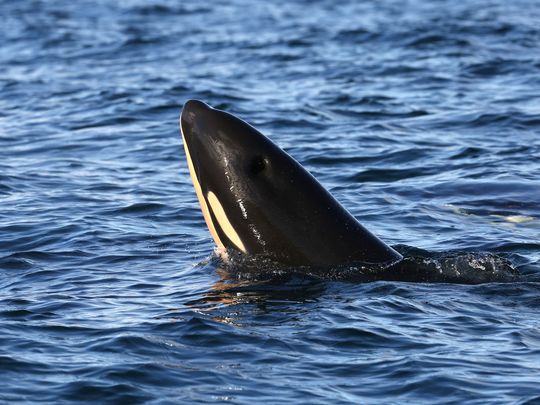
/ Gil Aegerter, KUOW FM (NPR Seattle) / December 8, 2015
/ San Juan Islander / December 7, 2015
/ San Juan Islander / December 6, 2015
/ Simon Little, News Talk 980 CKNW Vancouver / December 5, 2015
/ KOMO 4 News (ABC Seattle) / December 5, 2015
FREE AND CLEAR! Once-entangled "Twin" Bigg's killer whale T77A finally found by PWWA crew on November 23rd, 2015 near D'Arcy Island, BC, unencumbered and apparently in good condition. Photo: Capt. James Mead Maya, Maya's Legacy Whale Watching, San Juan Island, WA.
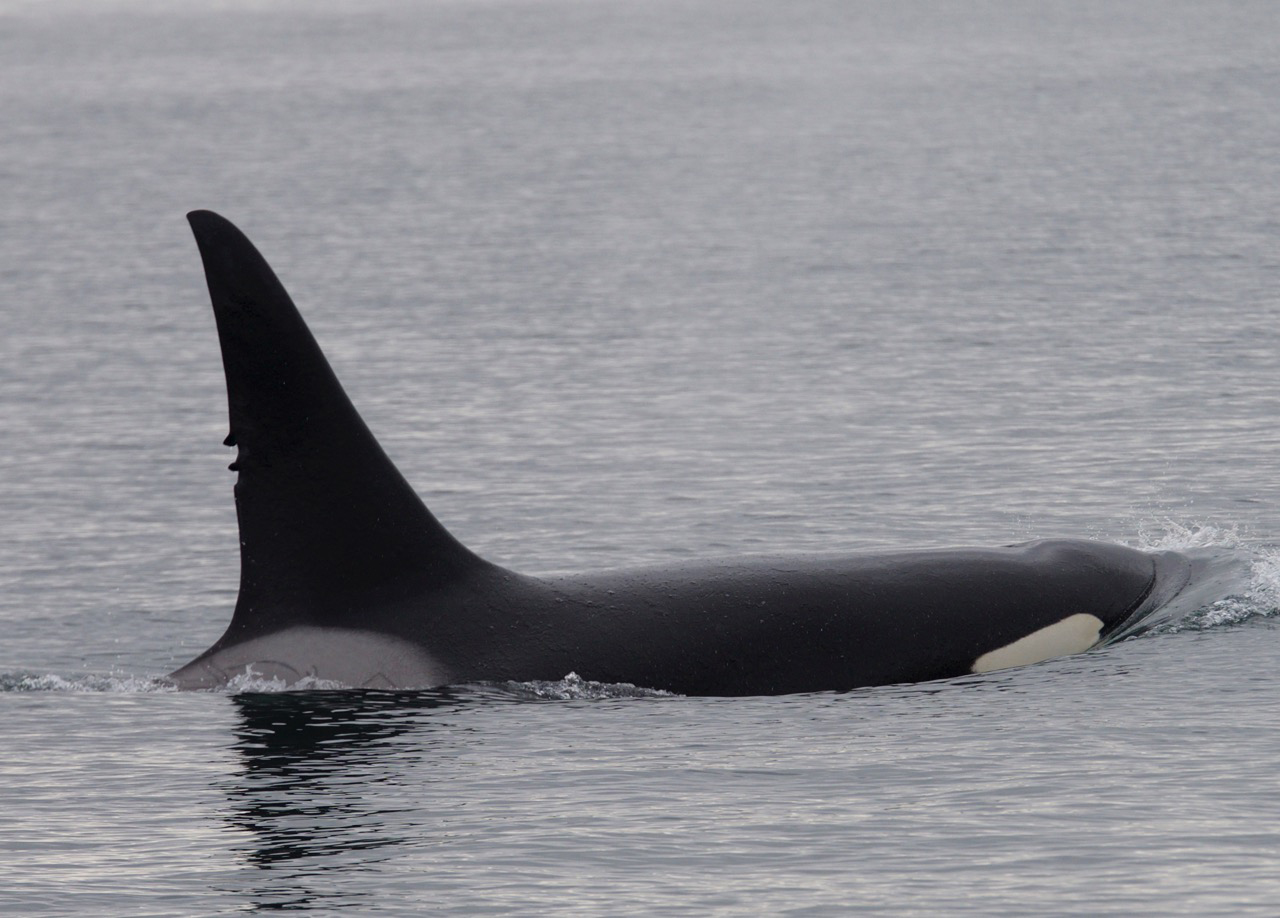
/ Marcus Hondro, Digital Journal / November 26, 2015
/ Schiavonne Robinson, AmeriPublications / November 25, 2015
/ Michael D. Reid, Times Colonist/Vancouver Sun / November 25, 2015
/ April Lawrence, CHEK News / November 24, 2015
/ San Juan Islander / November 24, 2015
/ Q13 FOX News (FOX Seattle) / November 23, 2015
/ Dean Stoltzon, CHEK News / November 17, 2015
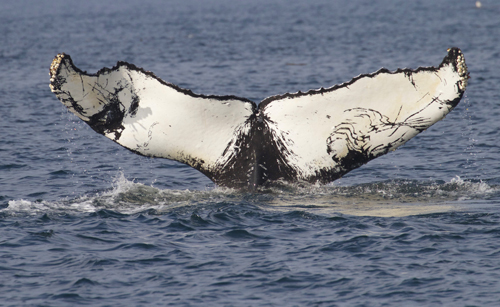
(above) The mystery humpback "Gnarly," one of 50 whales documented for the first time by researchers in the Salish Sea since last year, part of the "Humpback Comeback." Photo by Andrew Lees, Five Star Whale Watching, Victoria, BC.
/ Jim Donaldson, Editor, Bellingham Herald / November 17, 2015
/ CHEK News / November 17, 2015
/ Cheryl Chan, The Province / November 17, 2015
(below) Capt. Ian Roberts of SpringTide Whale Watching & Eco Tours in Victoria, BC throws a line to nine divers clinging to a capsized vessel in the frigid waters off Race Rocks on Sunday, November 16th, 2015. This is the second life-saving rescue involving a PWWA crew this year, and the sixth over the last three years. "We're not just watching whales and wildlife out there, we're watching out for everyone," said Michael Harris, Executive Director of PWWA.
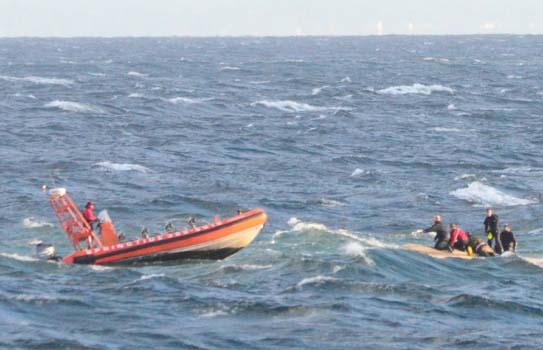
/ KOMO 4 News (ABC Seattle) / November 17, 2015
/ Rob Germainon, CHEK News / November 16, 2015
/ Tess van Straatenon, CHEK News / November 16, 2015
APB: T077A. The search is on for an entangled "twin."
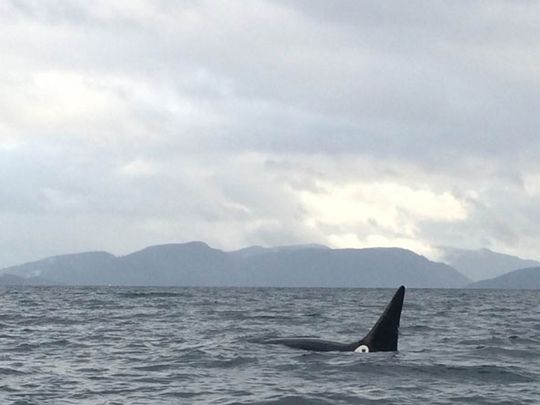
/ Amy Judd, Global News / November 4, 2015
/ KING 5 News (NBC Seattle) / November 4, 2015
/ San Juan Islander / November 4, 2015
If you see an orca with possible entanglement, immediately contact the .
/ Carla Wilson, Victoria Times Colonist / October 27, 2015
/ Canadian Press / October 27, 2015
/ Sunny Dhillon, Mark Hume, Ian Bailey and Tu Thanh Ha, Tofino, Vancouver and Toronto, The Globe and Mail / October 27, 2015
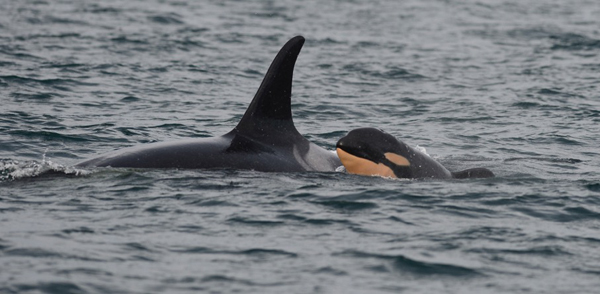
(above) GRANDMA HAS A BABY! Newborn calf J53 with its mother, 38-year-old grandmother J17, first seen in Haro Strait on Saturday, October 24th. This is the sixth calf born into the endangered Southern Resident Community since December 30th, 2014. Photo by Capt. Simon Pidcock, Ocean EcoVentures, Cowichan Bay, BC.
/ Sara Jean Green, Seattle Times / October 26, 2015
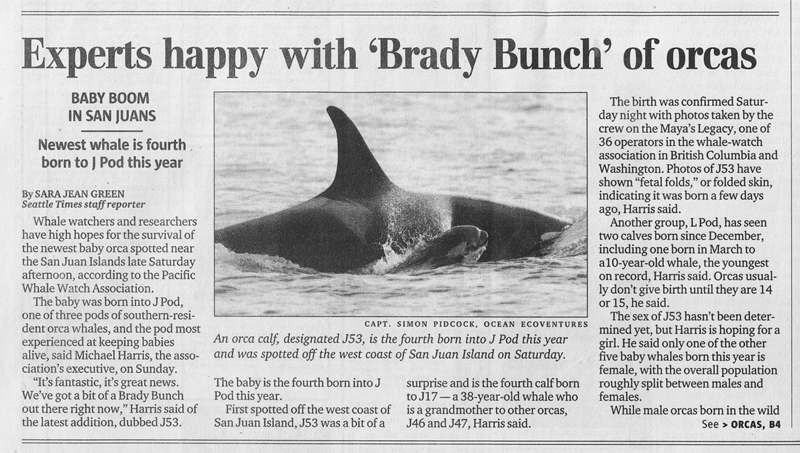
/ Cheryl Chan, The Province / October 25, 2015
/ Global News and The Associated Press / October 25, 2015
/ Jeff Bell, Times Colonist and Vancouver Sun / October 25, 2015
/ The Associated Press and Canadian Press / October 25, 2015
/ Allen Schauffler, Al Jazeera America / October 21, 2015
/ Lynda Mapes, Environmental Reporter, Seattle Times / October 21, 2015
A friendly humpback approaches a whale watch boat in Haro Strait. Photo: Naturalist Clint "Showtime" Rivers, , Victoria, BC.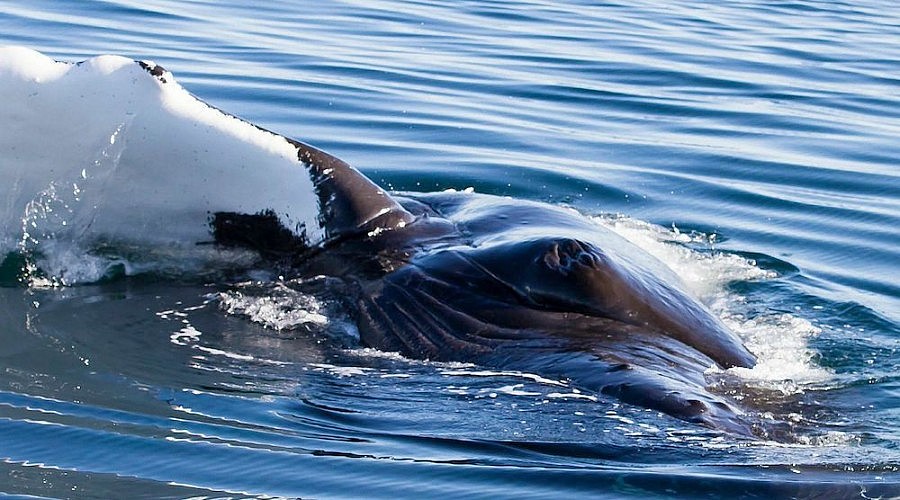
/ Kate Clark, KING 5 News (NBC Seattle) / October 15, 2015
/ CTV News / October 13, 2015
/ Global News / October 8, 2015
OH BABY! Welcome L122...
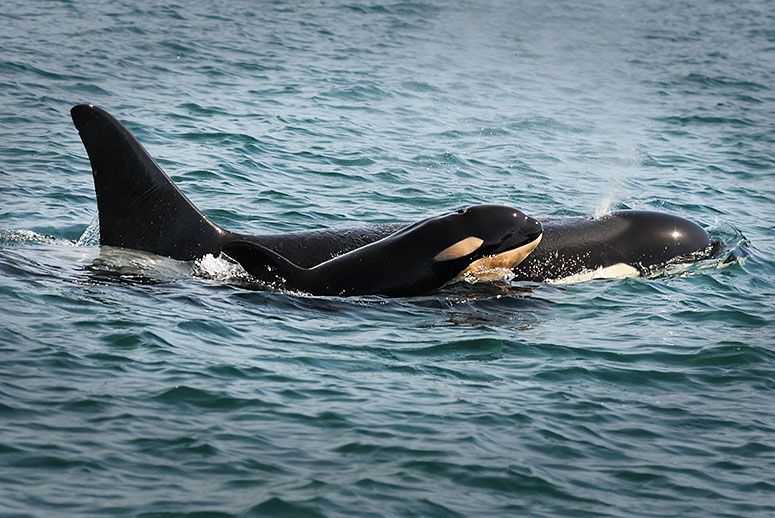
THE BABY BOOM CONTINUES! Meet L122, the newest member of the Southern Resident Community of orcas, spotted September 7th, 2015 near Sooke, BC by Capt. Mark Malleson of Prince of Whales Whale Watching, Victoria, BC, and Capt. Jim Maya and Naturalist Jeanne Hyde of Maya's Legacy Whale Watching, San Juan Island. The birth brings the endangered population to 82 members, with its 83rd, Lolita, in Miami Seaquarium. Photo: Dave Ellifrit, Center for Whale Research.
/ Daily Mail UK and Associated Press / September 15, 2015
/ Editorial Staffs, Victoria Times Colonist and Vancouver Sun / September 10, 2015
"The new orca calf that dominated the front page of Wednesday’s Times Colonist is much more than a cute tourist attraction; it’s a reminder of the interconnectedness of all living things. The state of the orca population is a direct reflection of the ocean’s health, and without healthy oceans, we human beings are in trouble. / Whale-watchers spotted the new calf swimming in Puget Sound with its mother. It is the fifth calf born this year to the southern resident killer whales that swim off the coast of B.C. and Washington..."
/ Cali Bagby, Islands Sounder / September 10, 2015
WHALE WATCH CREW RESCUES DIVER / PWWA Crew Responds to Diver in Respiratory Distress off Orcas Island, Possibly Saving His Life / PWWA PRESS RELEASE / September 10, 2015
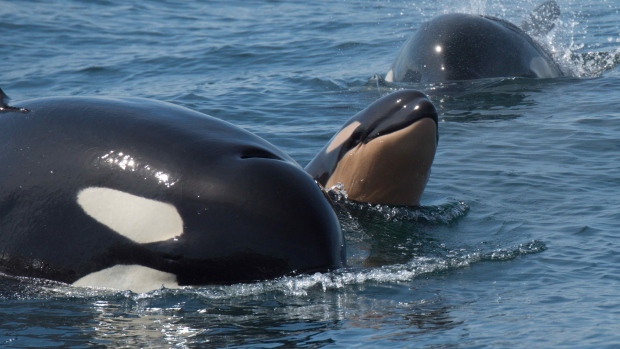
/ Michael D. Reid, Victoria Times Colonist / September 9, 2015
/ CBS News / September 9, 2015
/ Siemny Kim, KIRO 7 Eyewitness News (CBS Seattle) / September 8, 2015
/ Jeff Lawrence, CTV News / September 8, 2015
/ Seattle Times / September 7, 2015
/ Elizabeth Wiley, KING 5 News (NBC Seattle) / September 7, 2015
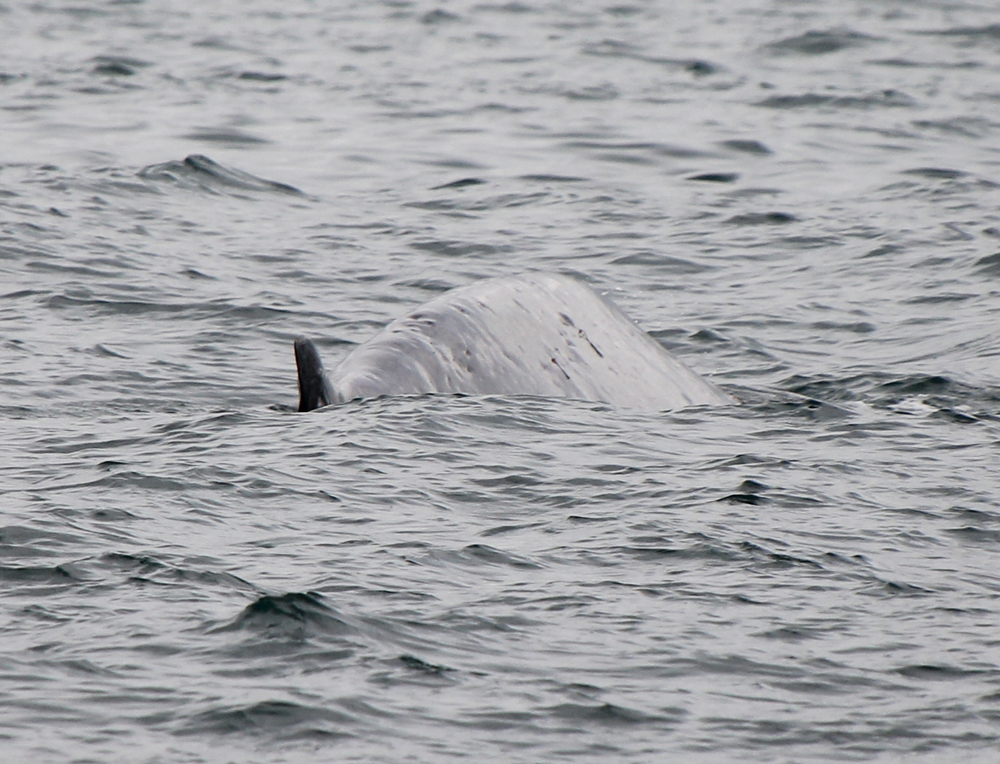
Puget Sound Express Whale Watching reported an extremely rare sighting of a fin whale in north Puget Sound, the second-largest creature to ever live on Earth. Naturalist photographer Janine Harles of Edmonds, WA got the shots and got them to scientists to review. KIRO 7 Eyewitness News reported that "the Center for Whale Research confirmed that Janine captured history."
/ The Associated Press / September 6, 2015
/ Adrian Chamberlain, Victoria Times Colonist / September 5, 2015
/ KOMO 4 News (ABC Seattle) / September 5, 2015
/ Joanna Small, KIRO 7 Eyewitness News (CBS Seattle) / September 4, 2015
/ Jeff Bell, Victoria Times Colonist / September 3, 2015
/ The Province / September 2, 2015
/ Dana Hutchingson, CHEK News / September 2, 2015
/ Manuel Valdez, Associated Press / September 2, 2015
"While the commercial whale watching industry is growing, authorities say they've been doing a good job of self-policing. That's not an easy task, said Michael Harris, executive director of the Pacific Whale Watch Association, which has 34 members. / 'We knew you can't have whale watching if you have no whales,' Harris said. So the main focus for officers has been recreational boaters 'who either don't know what the rules are, they don't know the impact they could potentially have, or they don't care,' (Washington Department of Fish & Wildlife Sgt. Russ) Mullins said."
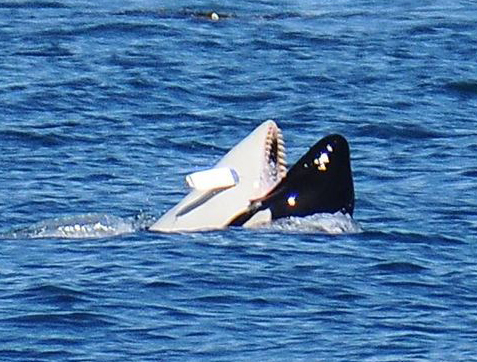
Photo: Naturalist Barbara Bender, All Aboard Sailing. "We’re obviously very concerned about the lure and how it might affect J39’s feeding and behavior," Lynne Barre, protected resources branch chief in NOAA Fisheries’ Seattle office, said in a statement released to the media. "We appreciate the reports from whale watchers who first noticed this and we will work with our partners on the water to watch J39 carefully.”
/ Alison Grande, KIRO 7 Eyewitness News (CBS Seattle) / August 4, 2015
/ KOMO 4 News (ABC Seattle) and Associated Press / August 4, 2015
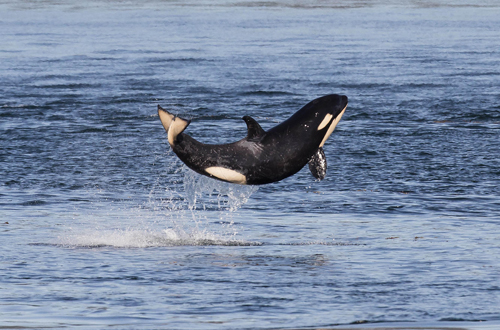
Seven-month-old orca calf J50 "Leaps for Joy" in Haro Strait, July 4th, 2015. Photo: Naturalist Clint "Showtime" Rivers, Eagle Wing Tours, Victoria, BC.
/ Phuong Le, Associated Press / July 23, 2015
/ U.S. News & World Report / July 22, 2015
/ Kelsey Warner, Christian Science Monitor / July 18, 2015
/ KING 5 News (NBC Seattle) / July 17, 2015
/ Jim Donaldson, Editor, Bellingham Herald / July 17, 2015
/ Amy Judd, Global News / July 17, 2015
/ Q13 FOX News (FOX Seattle) / July 17, 2015
/ San Juan Islander / July 17, 2015
/ Amy Clancy, KIRO 7 Eyewitness News (CBS Seattle) / June 15, 2015
/ Scott Rasmussen, Editor, Journal of the San Juans / June 9, 2015
/ Amy Clancy, KIRO 7 Eyewitness News (CBS Seattle) / June 5, 2015
/ Katie Derosa, Victoria Times Colonist and Vancouver Sun / June 3, 2015
/ Robin Levinson King, Toronto Star / June 3, 2015
/ Amanda Bernocco, Global News / June 3, 2015
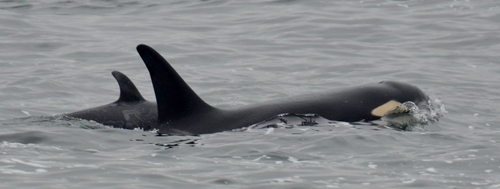
/ CBC News / June 2, 2015
/ Cassandra Jeffery, Kamloops BC Now / June 2, 2015
/ Bal Brach, CBC News / May 13, 2015
/ Susan Wyatt, KING 5 News (NBC Seattle) / May 10, 2015
/ KING 5 News (NBC Seattle) / May 8, 2015
/ By Hobbes Buchanan and Michael Harris / Everett Herald, Vancouver Sun and Others / May 3, 2015
ANOTHER BABY IN J-POD! On March 30, 2015, Pacific Whale Watch Association crews spot and document the latest addition to the endangered Southern Resident orcas, J52. Capt. Mark Malleson of reviewed photos taken from his boat and from naturalist Jeanne Hyde of to Ken Balcomb from the where it was confirmed. This is the fourth birth within the population in the last three months, bringing their numbers to 81 - with its 82nd member, Lolita, now at Miami Seaquarium. (Photo: Jeanne Hyde.)

/ Emily J. Gertz, TakePart / April 1, 2015
/ Amy Smart, Victoria Times Colonist / March 31, 2015
/ Phuong Le, Associated Press / March 31, 2015
/ CNN / March 31, 2015
/ CBC News / March 31, 2015
/ The Province / March 31, 2015
/ Gary Chittim, KING 5 News (NBC Seattle) / March 30, 2015
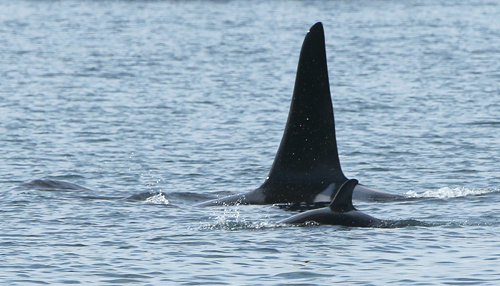
Six-week-old orca J51 with 24-year-old J27 off Pender Island, BC. (Photo: Naturalist Valerie Shore, Victoria.)
/ CBC News / March 29, 2015
/ CHEK News / March 29, 2015
/ KING 5 News (NBC Seattle) / March 28, 2015
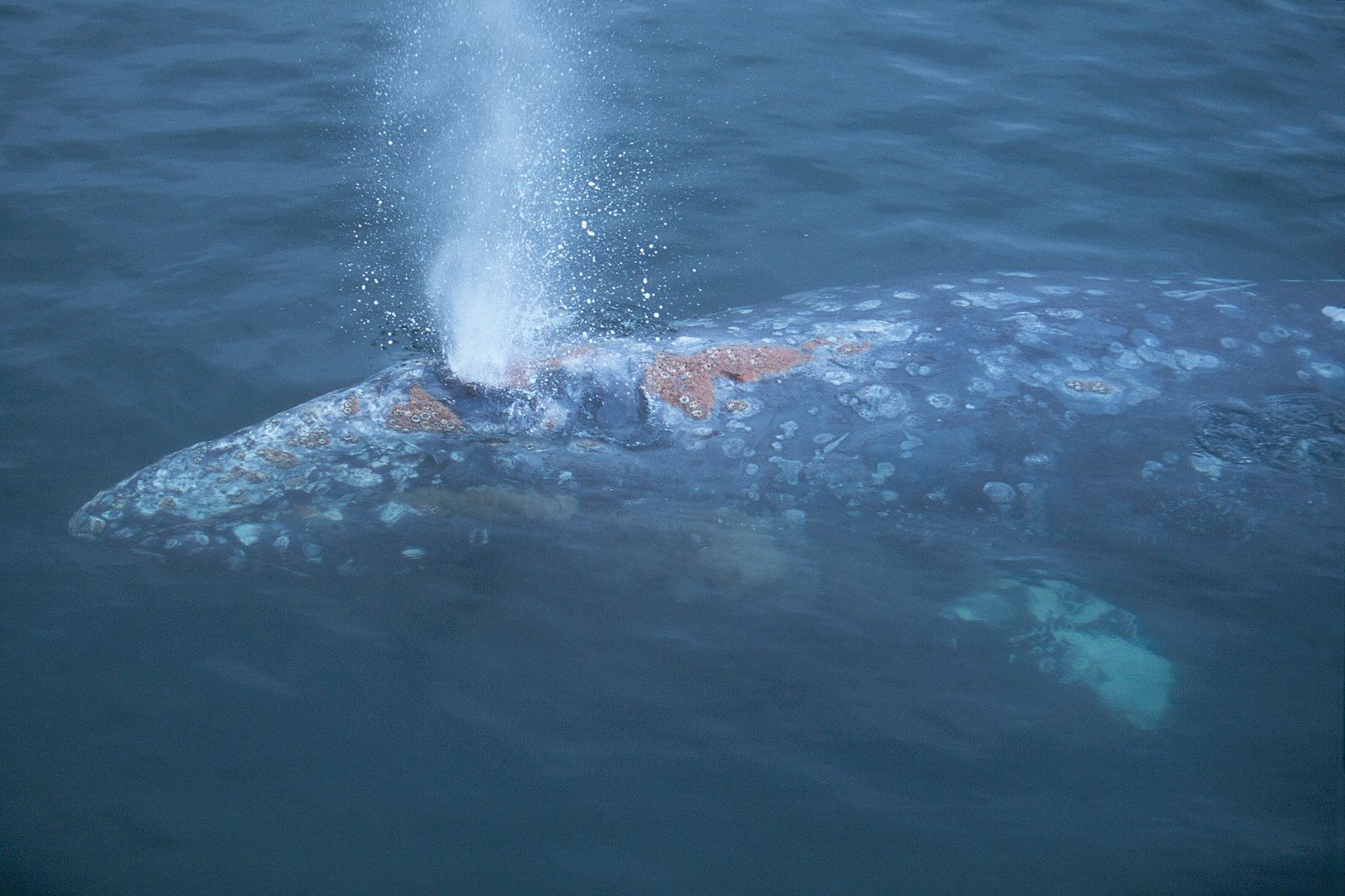
GRAY WHALE WATCHING SEASON OPENS! Northern Puget Sound has its "regulars" back, massive gray whales taking three-month pitstops every spring off of Everett and Whidbey Island from the greatest migration in the animal kingdom. Whale watchers have a 100% chance of seeing these amazing creatures. Book now with or 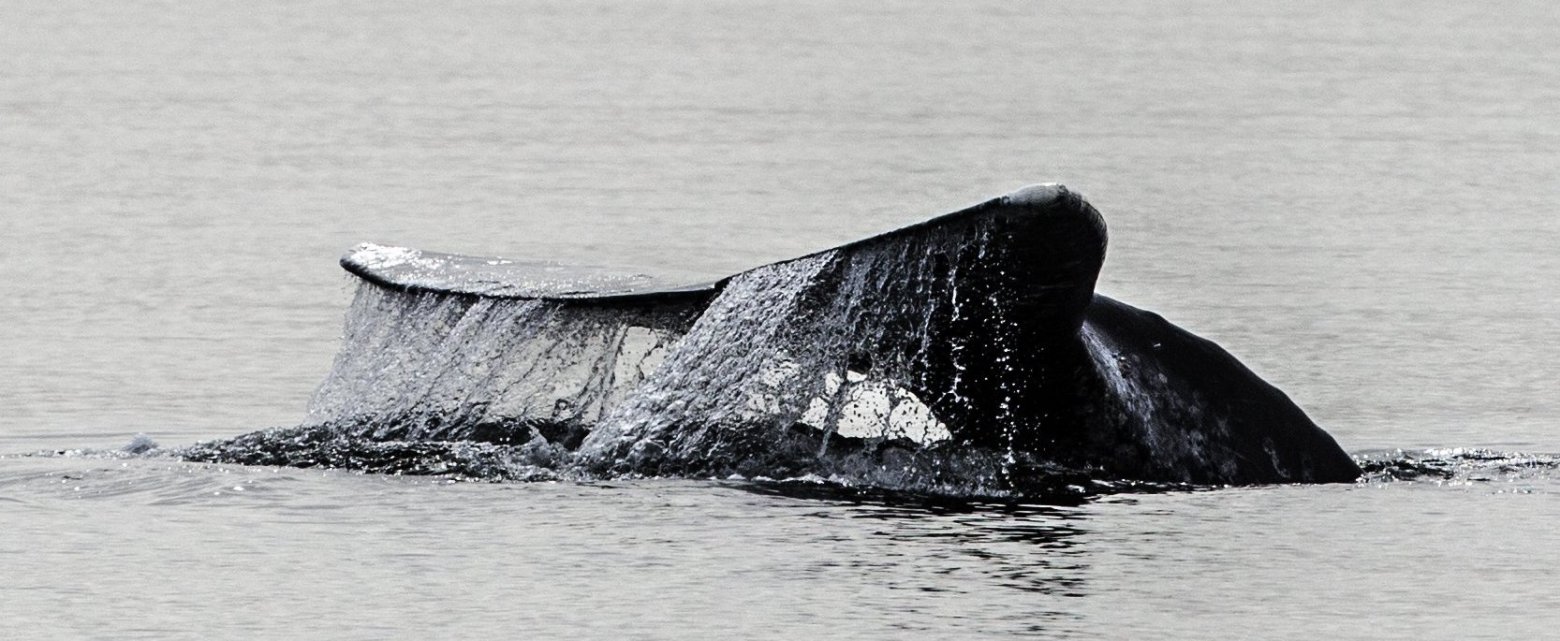
/ Steve Ringman, The Seattle Times / March 13, 2015
/ Glenda Luymes, The Province / March 12, 2015
/ Scott Cunningham, CTV News / March 12, 2015
BABY BOOM! Newborn Southern Resident orca L121 with mother L94. This is the third calf reported in the population since 12/30/14. Photo: NOAA Fisheries.
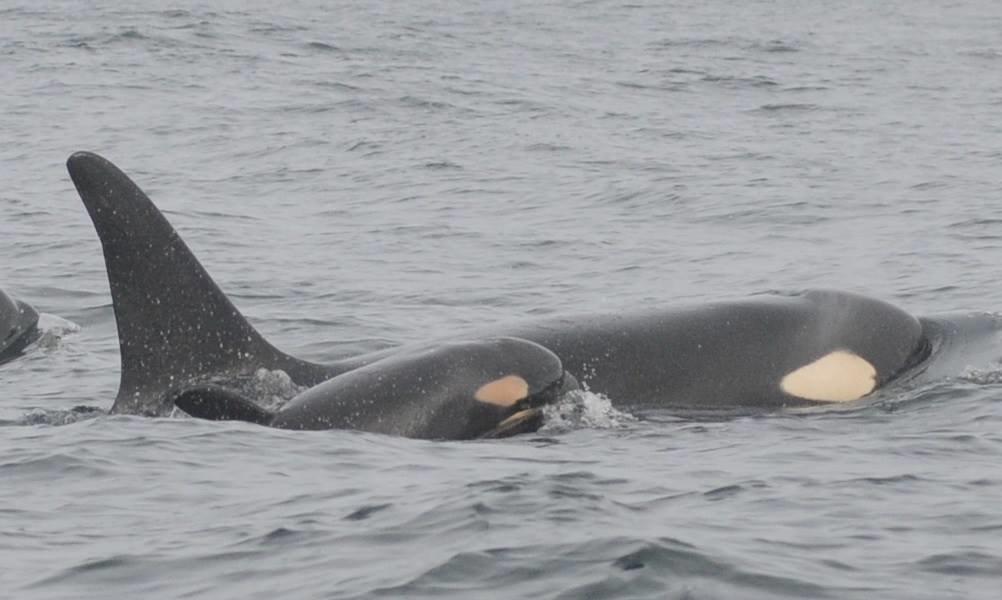
/ Global News / February 27, 2015
/ KIRO 7 Eyewitness News (CBS Seattle) / February 26, 2015
/ CBC News / February 26, 2015
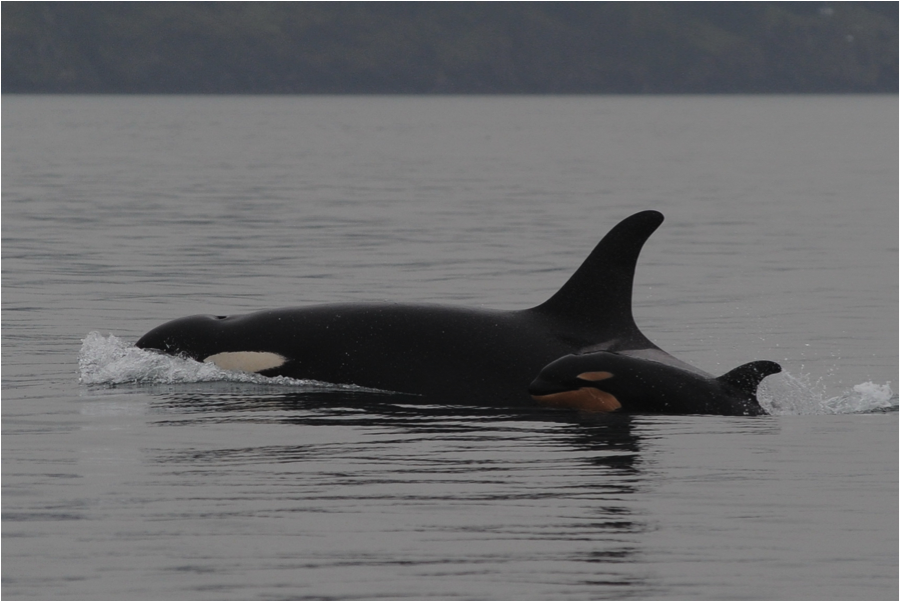
ANOTHER NEW BABY! Newborn J51 with mum J19 in Haro Strait, off San Juan Island, WA (photo: Dave Ellifrit, Center for Whale Research.
/ JoAnn Roe, CBC Radio "The Early Edition" / February 13, 2015
CTV 2/12 and 2/13/15.
/ CBC News / February 13, 2015
/ The Province / February 13, 2015
“This is about the best Valentine’s Day present you can imagine,” said Michael Harris, executive director of the Pacific Whale Watch Association, which represents 32 tour operators in Washington and B.C.
/ CTV News / February 13, 2015
/ Q13 FOX News (FOX Seattle) / February 12, 2015
/ Walker Orenstein, Seattle Times / February 5, 2015
Brian Goodremont from San Juan Safaris and the Pacific Whale Watch Association (PWWA) is against whale captivity and has been in the whale-watching businesses for 15 years. The industry is thriving, and Michael Harris, director of the PWWA estimated his association of businesses (18 in Washington) has seen 15 percent growth in the last two years.
“I grew up with the wildlife ethics through my family that the best place to view wildlife is in their natural environment with no or very little impact on their natural functions or life cycle,” Goodremont said. “From a professional standpoint I think it’s most interesting to view those animals in their natural environment.”
“We just think that it’s a tsunami of public perception against the idea of keeping whales and dolphins in captivity in the care of humans,” Harris said. “You can’t keep an animal that travels 100 miles a day in the care of humans because that’s not caring for them.”
/ PWWA joins coalition of groups on both sides of the border in raising concerns about project sited along the Fraser River location, the world’s No. 1 producer of Chinook, the preferred diet of the critically endangered whales. By David Kirby, TakePart.com / January 26, 2015
Banged-Out Baby... Center for Whale Research photo of newborn J50 with bite and rake marks. Scientists and experts speculate that orcas within J-Pod assisted in the birth of J50, pulling it out of its mother.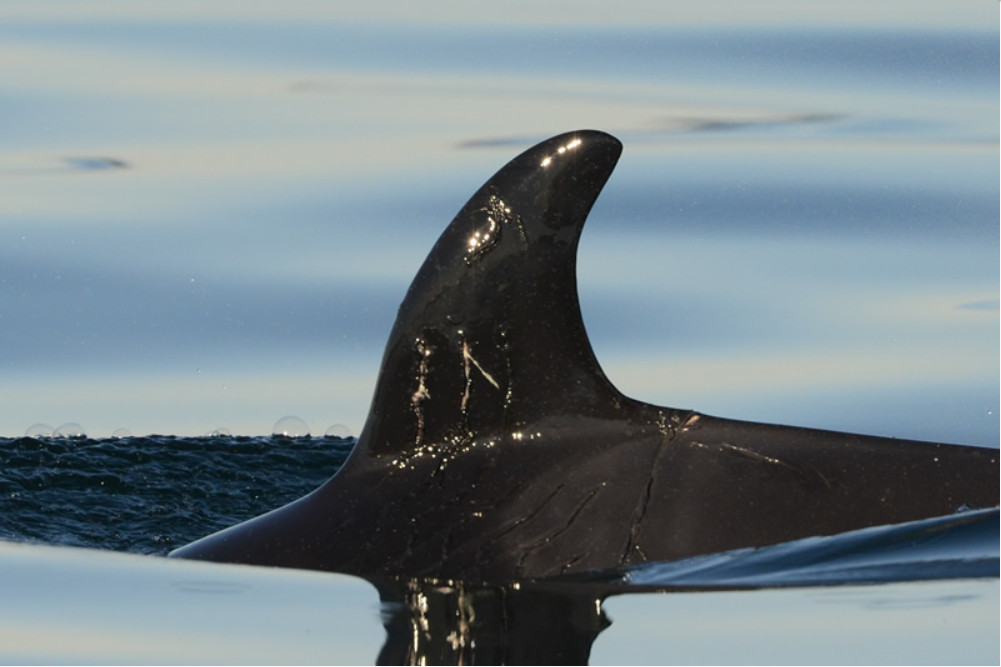
/ Paige Cornwell, Seattle Times / January 3, 2015
/ Environmental Specialist Gary Chittim, KING 5 News (NBC Seattle) / January 2, 2015
NEW YEAR'S BABY IN J-POD! Godspeed, little blackfish. We need you. Photo by Naturalist Valerie Shore, , Victoria, BC.
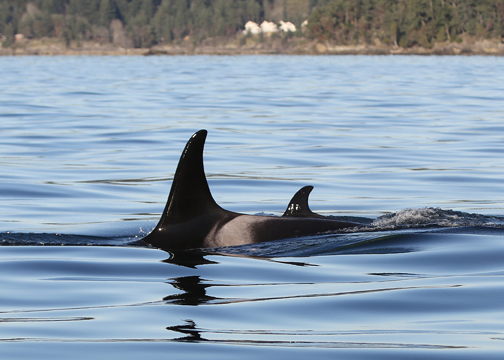
/ Environmental Specialist Gary Chittim, KING 5 News (NBC Seattle) / January 1, 2014
/ Amy Judd, Global News / December 31, 2014
/ CTV News / December 31, 2014
/ Richard Watts, Victoria Times Colonist and Vancouver Sun / December 30, 2014
NEW YEARS BABY! Pacific Whale Watch Association Crews Report New Calf in Endangered Southern Residents; Confirmed by Center for Whale Research / PWWA Release / December 30, 2014
(below) KIRO 7 Eyewitness News (CBS Seattle): New Year's Baby in J-Pod! / December 30 and 31, 2014.
/ JoAnn Roe, Bellingham Herald / December 15, 2014
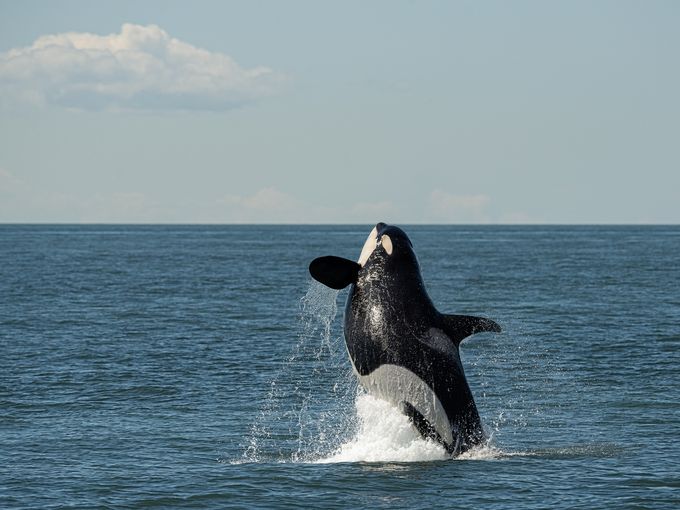
J32 breaches in Haro Strait. Photo: Naturalist Traci Walter.
/ Phuong Le, Associated Press / December 8, 2014
/ CBC News / December 6, 2014
/ Huffington Post and Associated Press / December 5, 2014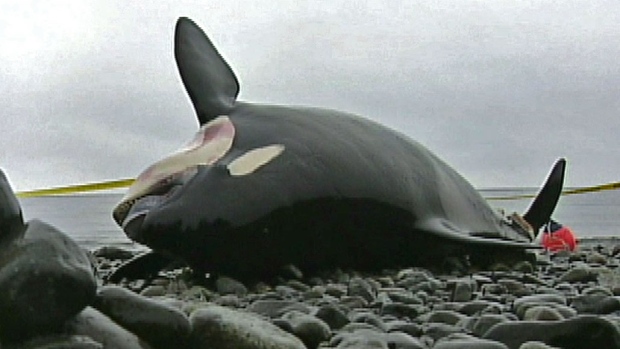
/ United Press International (UPI) / December 1, 2014
/ Delhi Daily News (India) / November 30, 2014
/ Peninsula Daily News / November 28, 2014
/ Jenna Iacurci, Nature World News / November 28, 2014
/ The Associated Press / November 27, 2014
/ Sandi Doughton, Science Reporter, The Seattle Times / November 26, 2014

/ Tourism Industry Association of Canada / November 26, 2014
/ The Olympian (Olympia, WA) / November 22, 2014
/ Larry Pynn, The Vancouver Sun / November 21, 2014
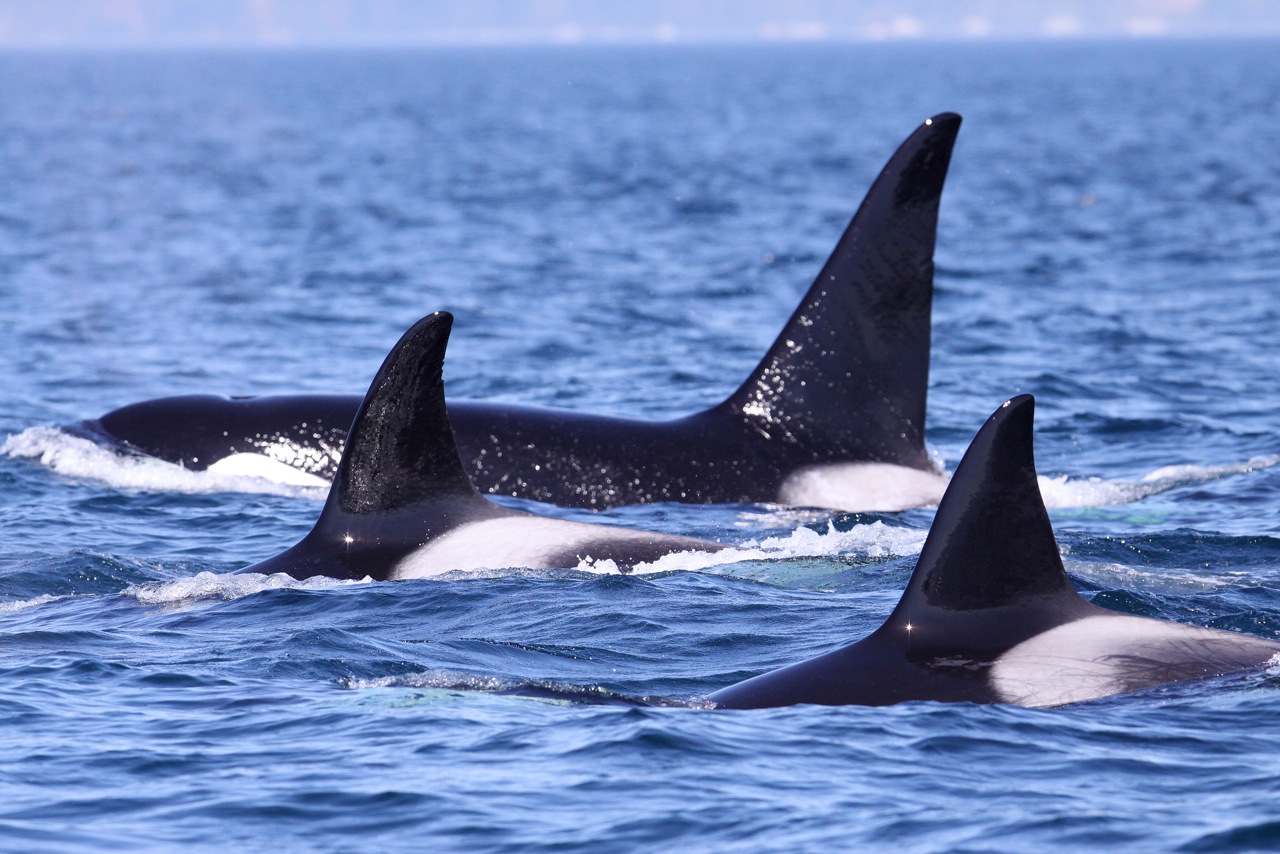
The Exotics - Outer-coastal transient killer whales CA173, CA166 aka U033, and CA172 west of Race Rocks, BC on September 15th. Photo by Capt. Mark Malleson, Prince of Whales Whale Watching, Victoria.
/ KOMO 4 News (ABC Seattle) / November 14, 2014
THE “EXOTICS” - Pacific Whale Watch Association Crews Report Frequent Sightings Lately of Mysterious California Transient Orcas in Salish Sea / PWWA Press Release / November 14, 2014
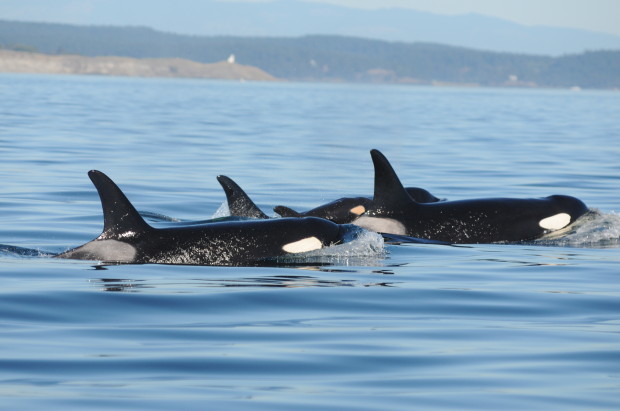
(above) Newborn Southern Resident orca L120 with family in September off San Juan Island, WA. The calf, the first birth in the population since 2012, is now missing and presumed dead. Photo by Dave Ellifrit,
/ Linda Shaw, The Seattle Times / October 21, 2014
/ The Canadian Press / October 18, 2014
/ ABC News and Associated Press / October 18, 2014
"While many measures are in place to reduce the probability of major oil spills, the effects of such spills are potentially catastrophic to the Southern Resident (orca) population, either through direct mortality or from harmful physiological effects, as shown by the significant declines in two groups of Alaskan killer whales that likely resulted from the Exxon Valdez spill in 1989."
Recovery Plan for Southern Resident Killer Whales (Orcinus orca) Prepared by National Marine Fisheries Service Northwest Regional Office
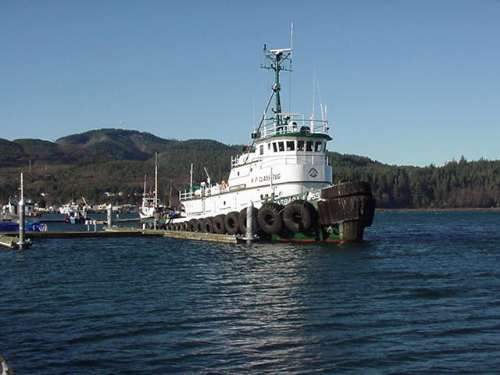
ORCA SAVER.... The Barbara Foss stationed at Neah Bay.
/ Kari Bray, The Everett Herald / September 30, 2014
“THE RIGHT PROJECT, IN THE WRONG PLACE…” Snohomish PUD Announces Abandonment of Pilot Tidal Turbine Project in Admiralty Inlet in Face of Opposition by Whale Watchers, Tribes, Orca Conservancy, OrcaLab and Others / PWWA Press Release / September 30, 2014 (also see / Environmental Specialist Gary Chittim, KING 5 News (NBC Seattle) / November 18, 2013 / Transcript / and / Clean Energy Project Raises Concern Among Conservationists / Allen Shauffler, Al Jazeera America / November 18, 2013
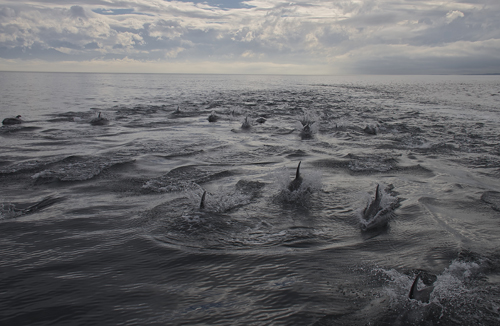
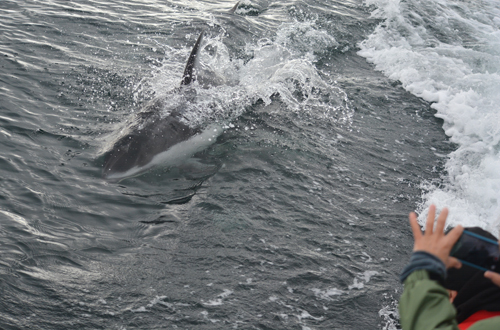
A Whole Lotta Lags... A group of 150 Pacific white-sided dolphins, or "lags," visit the Salish Sea. Photos by Capt. James Mead Maya and Naturalist Jeanne Hyde of Maya's Westside Whale Charters, Snug Harbor, WA.
/ The Huffington Post / September 29, 2014
/ The Province (Vancouver, BC) / September 29, 2014
/ Mike Clarke, CBC News / September 28, 2014
/ CHEK News / September 28, 2014
/ KSDK TV (NBC St. Louis) / September 28, 2014
/ Canada Journal / September 28, 2014
/ Environmental Specialist Gary Chittim and Ashley Stewart, KING 5 News (NBC Seattle) and NorthWest Cable News (WA, OR, AK, ID and MT) / September 26, 2014
/ Lynsi Burton, Seattle Post-Intelligencer / September 26, 2014
NEW PWWA VIDEO! Pacific white-sided dolphins off Victoria, BC on September 23-24, 2014. Video by Naturalist Jeanne Hyde of Maya's Westside Whale Charters and Naturalist Dylan Iverson of Eagle Wing Tours.
/ San Juan Islander / September 26, 2014
A WHOLE LOTTA LAGS OUT THERE… PWWA Crews Report a Boom in Pacific White-Sided Dolphins the Last Few Weeks, Marking an Auspicious Return for a Species Not Often Seen in Recent Years in Salish Sea / PWWA Press Release / September 26, 2014
OH BABY!
Newborn Southern Resident orca L120 with family off San Juan Island, WA. It's the first birth in the population since 2012. Photo by Dave Ellifrit, Center for Whale Research.
/ Emery Dennel, China Topix / September 8, 2014
/ Busta Sebetseba, News Tonight Africa / September 8, 2014
/ Stephen Messenger, The Dodo / September 8, 2014
/ Jake Ellison, Seattle Post-Intelligencer / September 7, 2014
/ USA TODAY and Susan Wyatt, KING-TV (NBC Seattle) / September 7, 2014
/ KOMO 4 News (ABC Seattle) / September 7, 2014
/ KIRO 7 News (CBS Seattle) / September 7, 2014
NEW BABY ORCA! Endangered Southern Resident Orcas Have First Birth Since 2012, Pacific Whale Watch Association Crew Snaps the First Baby Photo / PWWA Press Release / September 6, 2014
/ Associated Press / August 31, 2014
/ Christopher Dunagan, The Kitsap Sun / August 31, 2014
/ Mary Griffin, CHEK News / August 29, 2014
/ Jake Ellison, Seattle Post-Intelligencer / August 28, 2014
/ Frank Luba, The Vancouver Province / August 28, 2014
/ Amy Smart, Victoria Times Colonist / August 28, 2014
/ San Juan Islander / August 28, 2014
THE “RESIDENT” TRANSIENTS: Pacific Whale Watch Association Releases New Data on Record Transient Orca Sightings In the Sound and Straits / Spectacular New Photos Available to Media / PWWA Press Release / August 28, 2014
NEW WHALE WATCH BUSINESS SURFACES IN PORT ANGELES! Island Adventures Whale Watching Launches in Clallam County on August 23th / PWWA/Island Adventures Press Release / August 14, 2014
/ San Juan Islander / August 13, 2014
FISH, BLACKFISH: Pacific Whale Watch Association Crews Report “Best Year” for Resident Killer Whale Watching in the Sound and Straits in Decades – But Scientists Warn that Orcas are Still in Trouble / PWWA Press Release / August 13, 2014
/ Hosted by Bob McLaughlin, KIRO Radio / July 6, 2014
/ Sandra McCulloch, Victoria Times Colonist / July 3, 2014
/ Libby Denkmann, KIRO Newsradio / June 27, 2014
/ Jeff Bell, Victoria Times Colonist / June 25, 2014
/ San Juan Islander / June 25, 2014
/ Environmental Specialist Gary Chittim, KING 5 News (NBC Seattle) / June 25, 2014
/ John Hopperstad, Q13 FOX Weekend News (FOX Seattle) / June 25, 2014
/ Phuong Le, Associated Press / June 25, 2014
/ Chris Legaros, KIRO 7 News (CBS Seattle) / June 25, 2014
/ Louise Hartland, CTV News / June 23, 2014 / 
/ Q13 FOX News (FOX Seattle) / June 13, 2014
/ Gulf Islands Driftwood / June 11, 2014
/ "They appear to be healthy and robust... normal in every way,” Lance Barrett-Lennard from Vancouver Aquarium’s Marine Mammal Research Program, wrote in an e-mail from the field. “Great stuff.” / The Globe and Mail / June 11, 2014
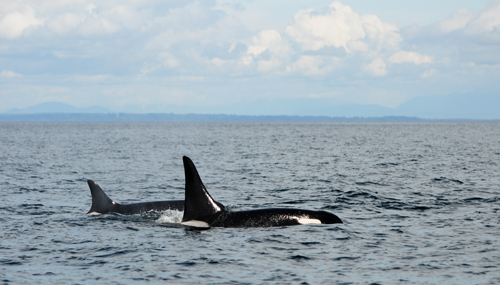
CENTENARIAN CETACEA. 103-year-old Southern Resident orca J2, or "Granny," left, with L87, or "Onyx," in the foreground in the southern Strait of Georgia on May 9. Photograph by Capt. Simon Pidcock. Ocean EcoVentures of Cowichan Bay, BC.
/ The Green Report (Italy) / May 15, 2014
/ Pelop (Greece) / May 15, 2014
/ Jim Algar, Tech Times / May 15, 2014
/ Allison Geller, Opposing Views / May 15, 2014
/ Nadine Kalinauskas, Yahoo! News / May 15, 2014
/ Victoria Woollaston, The Daily Mail (UK) / May 14, 2014
/ Canada Journal / May 14, 2014
/ Bruce Totolos, The French Tribune / May 14, 2014
/ Discovery News / May 14, 2014
/ CBC News / May 13, 2014
/ Paula Baker, Global News / May 13, 2014
/ Leslie Baehr, Business Insider / May 13, 2014
/ Wildlife Extra / May 13, 2014
/ Geof Levine, Yotta Fire / May 13, 2014
/ Polly Mosendz, The Wire / May 13, 2014
/ Luke Simcoe, Metro News / May 13, 2014
/ Alicia Graef, Care2.com / May 13, 2014
/ The Huffington Post / May 13, 2014
/ Sarah Petrescu, Victoria Times Colonist / May 12, 2014
/ Environmental Specialist Gary Chittim, KING 5 News (NBC Seattle) / May 12, 2014
Grandmother's Day / Pacific Whale Watch Association Crews Confirm the Return of Southern Resident Orca Matriarch J2, “Granny” / PWWA Press Release / May 5, 2014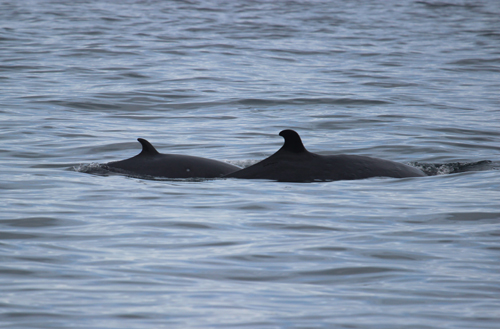
Rare photo of minke whale calf (left) surfacing in Salish Sea. Photo by Island Adventures Whale Watching Captain/Naturalist Brooke McKinley.
/ Travis Mayfield, Q13 FOX News (FOX Seattle) / May 6, 2014
/ San Juan Islander / May 6, 2014
"We've Never Seen Anything Like This" / Pacific Whale Watch Association Crews Report Unprecedented Sighting of Minke Whale With Newborn Calf in Sound and Straits; Region’s “Most Mysterious Whale” Surfaces With Infant in Tow, and PWWA has First Baby Photos / PWWA Press Release / May 5, 2014
/ Environmental Specialist Gary Chittim, KING 5 News (NBC Seattle) / April 22, 2014
(below) "Kiss the Sky! The Orca Freedom Concert" Press Conference with Ann and Nancy Wilson, Graham Nash, Arielle, Country Joe McDonald, and PWWA President and Baby Wild Films Principal Creative Michael Harris. April 22nd, 2014 / Raw Footage



 / KING TV's "New Day Northwest" (NBC Seattle) / April 24, 2014



/ Environmental Specialist Gary Chittim, KING 5 News at 5pm (NBC Seattle) / April 22, 2014


/ KING 5 News at 6:30pm (NBC Seattle) / April 22, 2014
/ KING 5 News at 10pm (NBC Seattle) / April 22, 2014
/ KING 5 News at 11pm (NBC Seattle) / April 22, 2014
HEART WITH SPECIAL GUEST GRAHAM NASH, JOAN JETT AND THE BLACKHEARTS HEADLINE HISTORIC CONCERT IN SEATTLE TO BENEFIT WILD ORCA RESEARCH AND ADVOCACY / PWWA Press Release / April 8, 2014
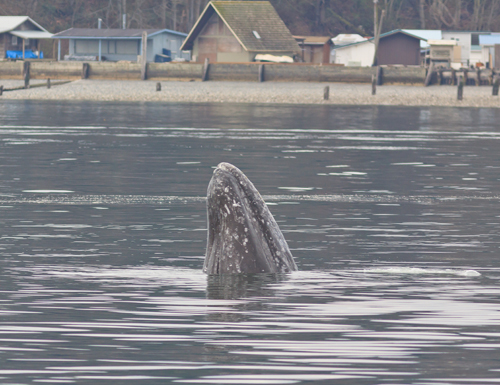
This March, 2014 photo provided by Capt. Michael Colahan of Island Adventures Whale Watching and Picture Pangea Photography, shows a male gray whale identified as “Little Patch," or #53 spyhops in Possession Bay near Everett, Wash. The Pacific Whale Watch Association says the whale is one of a group of about a dozen primarily male gray whales that feast on ghost shrimp in north Puget Sound waters for about three months during spring on their way to Alaska.
/ Bellingham Herald / Mar 6, 2014
/ Yakima Herald Republic / Mar 6, 2014
/ Spokesman Review / Mar 5, 2014
/ Seattle Times / Mar 4, 2014
/ Manuel Valdez, Associated Press / Mar 4, 2014
/ Everett Herald / Mar 4, 2014
/ Greenfield (Indiana) Daily Reporter / Mar 4, 2014
/ The Columbian / Mar 4, 2014
/ The Connecticut Post / Mar 4, 2014
/ The Oregonian / Mar 4, 2014
" / The Anchorage Daily News / Mar 4, 2014
“LIKE CLOCKWORK” Pacific Whale Watch Association Crew Confirms Sighting of First of 11 “Resident” Gray Whales off Everett, WA This Weekend – Same Whale That Showed Up First Last Year! / Pacific Whale Watch Association Press Release / Mar 4, 2014

/ ABC News Radio / Feb 28, 2014
/ Andrew Duffy, Victoria Times Colonist / Feb 28, 2014
/ Craig Sailor, Staff Writer, Tacoma News Tribune / Feb 25, 2014
/ Associated Press / Feb 25, 2014
/ Ashley Ahearn, KUOW (National Public Radio, Seattle / Feb 21, 2014
/ Seattle Times Editorial Board / Feb 16, 2014
/ Billy Frank Jr., Special to the Seattle Times / Feb 16, 2014
/ Mark Yuasa, Seattle Times / Feb 14, 2014
/ Negar Mojtahedi, Global News / Feb 14, 2014
HERE COME THE GRAY WHALES! / Record Number of Gray Whales Heading This Way – Pacific Whale Watch Association Crews Report First Sightings in the Sound and Straits / PWWA Press Release / Feb 13, 2014
/ Peter T. Fretwell, PLOS One / Feb 12, 2014
/ David Kirby, Take Part / Feb 12, 2014
/ Travis Lupik, Georgia Strait / Feb 12, 2014
/ Northwest Indian Fisheries Commission / Feb 10, 2014
/ Ron Judd, Seattle Times / Feb 7, 2014
/ Billy Frank Jr., Special to the Seattle Times / Feb 7, 2014
/ Alex Tizon, Seattle Times / Feb 7, 2014
/ Megan Paolone, BuzzFeed / Feb 6, 2014
/ Lori Cuthbert, Discovery News / Feb 6, 2014
/ Amanda Just, Ecorazzi / Jan 29, 2014
/ Pete Thomas, Grind Media / Jan 29, 2014
/ Environmental Specialist Gary Chittim, KING 5 News (NBC Seattle) / Jan 24, 2014 / Craig Welch, Seattle Times / Jan 24, 2014
/ Stacy Ross, CHEK News / Jan 22, 2014
/ Christopher Dunagan, The Kitsap Sun / Jan 22, 2014
/ Sharon Kivisto, Editor, San Juan Islander / Jan 22, 2014
/ Scott Rasmussen, Editor, The Journal of the San Juans / Jan 22, 2014
/ Seattle Times Editorial Board / Jan 20, 2014
/ The Associated Press / Jan 6, 2014
/ Eric Zerkel, The Weather Channel/weather.com / Jan 2, 2014
 / Katia Hetter, CNN Travel / Jan 2, 2014
/ Jeff Bell, The Province (Vancouver) / Dec 20, 2013
/ Michael Harris, Executive Director, Pacific Whale Watch Association, San Juan Islander / Dec 20, 2013
/ Jeff Bell, Vancouver Sun / Dec 20, 2013
/ PWWA Executive Director Michael Harris on The Simi Sara Show, CKNW Radio / Dec 20, 2013
/ Jeff Bell, Victoria Times Colonist / Dec 20, 2013
A FLURRY OF WINTER WHALE SIGHTINGS - Pacific Whale Watch Association Crews Report Unusual Amount of “Off-Season” Encounters Now in the Salish Sea / PWWA Press Release / Dec 19, 2013
/ Mark Hume, The Globe and Mail / Dec 18, 2013
/ Alicia Chang and Julie Watson, ABC News and Associate Press / Dec 16, 2013
/ Associated Press / Dec 15, 2013
/ New Zealand Herald / Dec 13, 2013
/ Associated Press / Dec 12, 2013
/ Heartlinker / Dec 12, 2013
/ Cliff Edwards, Bloomberg News / Dec 11, 2013
/ Drew Schmidt and Michael Harris, Pacific Whale Watch Association, for The Bellingham Herald / Dec 5, 2013
/ Nicole Mooradian, Editor, Palos Verdes Patch / Dec 5, 2013
/ Dene Moore, The Canadian Press / Dec 3, 2013
/ Dene Moore, The Canadian Press / Dec 3, 2013
/ Pierrot Durand, The French Tribune / Nov 29, 2013
/ Justin Sorkin, Science News Australia / Nov 29, 2013
/ Larry Pynn, Vancouver Sun / Nov 28, 2013
/ Nadine Kalinauskas,Yahoo! News / Nov 28, 2013
/ CTV British Columbia / Nov 27, 2013
/ Amy Judd, Global News / Nov 27, 2013
/ The Huffington Post / Nov 27, 2013
/ CBC News / Nov 27, 2013
/ Larry Pynn, Vancouver Sun / Nov 27, 2013
/ Nov 27, 2013
/ Jake Ellison, Seattle Post-Intelligencer / Nov 25, 2013
NO FISH, NO BLACKFISH - Pacific Whale Watch Association Scientists Urge Feds to Prioritize Salmon Recovery to Help Endangered Southern Resident Orcas / PWWA Press Release / Nov 22, 2013 /
/ Environmental Specialist Gary Chittim, KING 5 News (NBC Seattle) / Nov 18, 2013 / Transcript
Clean Energy Project Raises Concern Among Conservationists / Allen Shauffler, Al Jazeera America / Nov 18, 2013
/ "It's the most incredible thing I've seen in my 26 years of doing this. It's like going to Africa, but these are marine animals instead of lions, tigers and antelopes. It's just amazing," (Naturalist Nancy) Black said. KSBW (ABC Monterey) / Nov 14, 2013
/KSBW (ABC Monterey) / Nov 11, 2013
/ Mike Benbow, Special to The Everett Herald / Nov 9, 2013 - In the past two months seven wild orcas have been captured in the Sea Of Okhotsk for the purposes of stocking aquariums and water parks. These are the first wild orca caught in more than a decade, making it clear that Russian fishermen are earnest about reviving the wild capture trade. / Tim Zimmerman, Outside Magazine / Nov 8. 2013
/ Sarah Petrescu, Victoria Times Colonist / Nov 6, 2013
/ Katie Kindelan, ABC News / Nov 5, 2013
/ Carla Herreria,
The Huffington Post / Nov 5, 2013
/ Ashley Ahearn,
National Public Radio / Nov 4, 2013
/ Paula Baker, Global News / Nov 3, 2013
/ The Wrap by Ron Judd, Seattle Times / Nov 3, 2013
/ Doug Esser, Associated Press / Oct 31, 2013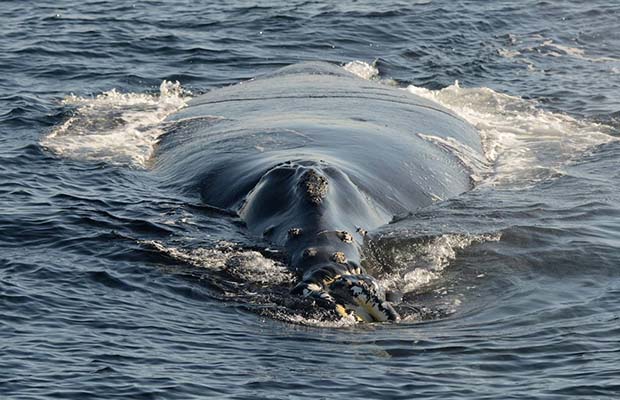
For just the second time in more than 60 years, an endangered North Pacific right whale has been sighted in B.C. waters, this time off the entrance to Juan de Fuca Strait near Victoria. Photograph by: John Ford, DFO.
/ Larry Pynn, Vancouver Sun / Oct 31, 2013
/ Brenlee Coates, Cottage Life / October 31, 2013
(below) J8 seen on May 7th. Photo: Naturalist Tasli Shaw, Steveston Seabreeze Adventures.
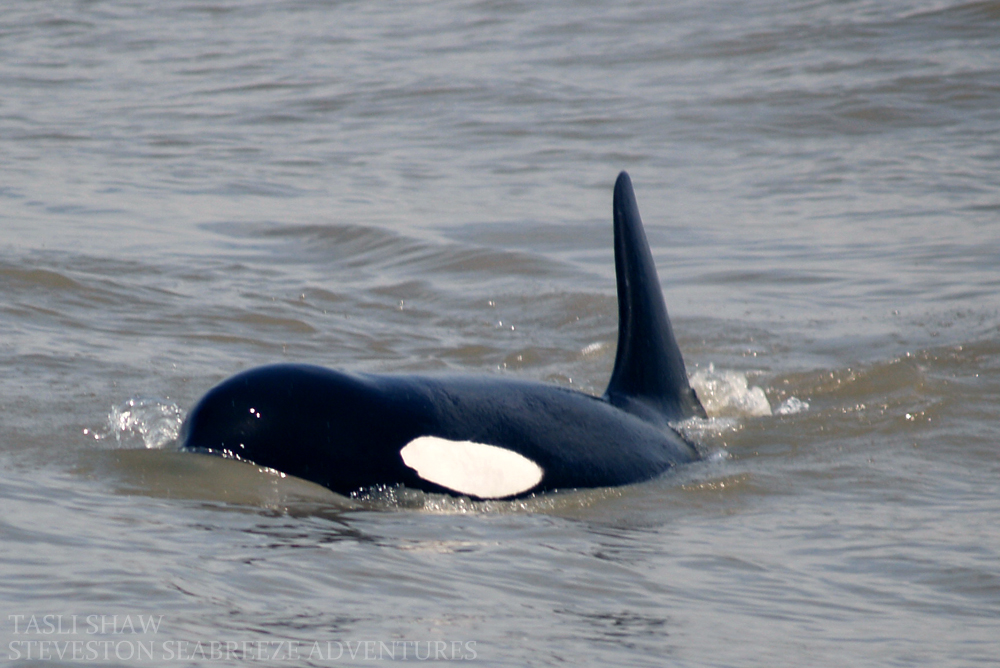 J8 - Southern Resident Matriarch - Passes Away
October 31, 2013 - Pacific Whale Watch Association crews confirm the sad news from The Center for Whale Research: the 80-year-old female resident orca J8, also known as Speiden, is missing and presumed dead. The Southern Resident Community has lost its second-oldest member.
"J8 was truly like a grandmother to all of us," said Michael Harris, Executive Director of PWWA. "She lived a long and eventful life, and I'm sure passed peacefully with generations of family around her. We'll miss her a lot."
/ Gary Chittim, KING 5 News / October 31, 2013
/ The Vancouver Sun / Oct 25, 2013
/ Chandler Grieve, CTV News Victoria / Oct 18, 2013
Fall Migration in Full Swing for Humpbacks: The "Comeback Kids" of the Salish Sea, Once Hunted Out in Local Waters, Now Rule the Waterways Again, Putting on Spectacular Shows for Whale Watchers / PWWA Press Release / Oct 17, 2013
/ David Kirby, Author of "Death at SeaWorld," for TakePart.com / Oct 15, 2013
/ James Munson, iPolitics / October 8, 2013
/ Maria L. Laganga, Los Angeles Times / Sept 29, 2013
/ Andrew Duffy, Victoria Times Colonist / Sept 24, 2013
Brett Soberg of Eagle Wing Tours (center) accepts EcoStar Award.
/ Rocky Barker, The Idaho Statesman / Sept 16, 2013
/ Larry Pynn, Vancouver Sun / Sept 12, 2013
/ Canadian Press / Sept 11, 2013
/ Jeff Bell, Victoria Times Colonist / Sept 6, 2013
/ Telegraph India / Sept 5, 2013
/ The Canadian Press / Aug 29, 2013
/ Amy Smart, Victoria Times Colonist / Aug 21, 2013
/ The Huffington Post / Aug 19, 2013
/ KING 5 News (NBC Seattle) / Aug 17, 2013
Fire Guts Building in Friday Harbor: Two Pacific Whale Watch Association Offices Among Those Lost in Early Morning Blaze, But Operators Say “We’re Still Running Daily Trips” / PWWA Press Release / Aug 17, 2013
/ Judith Lavoie, Victoria Times Colonist / Aug 16, 2013
/ Mark Hume, The Globe and Mail / Aug 15, 2013
/ Whale tourism added an estimated $2 billion to the global economy last year, a number that is expected to increase by 10% each year. / Rebecca Bluitt, CNN / Aug 13, 2013
/ Mark Hume, The Globe and Mail / Aug 13, 2013
/ Mark Stachiew, Postmedia News / Aug 12, 2013
/ Larry Pynn, Vancouver Sun / Aug 10, 2013
/ ABC News / Aug 19, 2013
/ Matt Lorch, Q13 FOX News (FOX Seattle) / Aug 2, 2013
Still "Endangered" / Pacific Whale Watch Association Applauds NOAA Decision to Reject Petition to Remove Puget Sound's Killer Whales from Endangered Species Act / PWWA Press Release / Aug 2, 2013
/ Monika Wieland, Orca Watcher / July 27, 2013 
/ Emine Sinmaz, The Daily Mail UK / July 24, 2013
/ Judith Lavoie, Victoria Times Colonist / July 20, 2013
/ John White, Q13 FOX News (FOX Seattle) / July 18, 2013
New Grant for Department of Fish & Wildlife Enforcement / Pacific Whale Watch Association Welcomes News of New Funding for State Agency to Increase Enforcement Presence to Protect Southern Resident Orcas / PWWA Press Release / July 17, 2013
/ Major Jester, Yahoo! News / July 17, 2013
/ Gary Chittim, KING 5 News (NBC Seattle) and Associated Press / July 9, 2013
/ KOMO 4 News (ABC Seattle) and Associated Press / July 8, 2013
Springer the Orca is a Mother! Northern Resident Orca Rescued 11 Years Ago Returns to BC With Newborn in Tow / PWWA Press Release / July 8, 2013
/ CBC News / July 8, 2013
/ Marianna Hicks, Q13 FOX News (FOX Seattle) / June 25, 2013
/ Chris Dunagan, Kitsap Sun / June 25, 2013
L119, Southern Resident "Comeback Kid" / Pacific Whale Watch Crews Spot Baby Orca, Once Thought Dead, Back With Family in Sound and Straits / PWWA Press Release / June 24, 2013
/ Christopher Dunagan, The Kitsap News / June 20, 2013
/ Vancouver Sun / June 14, 2013
/ Norris Palmer, San Juan Islander / June 13, 2013
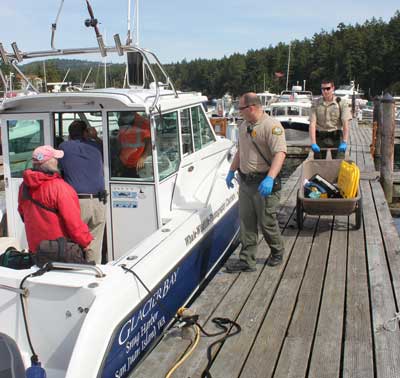
(left) San Juan County Sheriff's Department and EMT responders meet Capt. Spencer Domico, Jeanne Hyde and the crew of the Peregrine, Maya's Westside Whale Watching, after the whale watch boat rescued two capsized sea kayakers off west side of San Juan Island.
/ Seattle Post-Intelligencer /
June 12, 2013
/ Judith Lavoie, Vancouver Sun / June
/ KOMO 4 News (ABC Seattle) / June 12, 2013
/ Q13 FOX News (FOX Seattle) / June 11, 2013
HUMPBACK WHALES BACK IN SOUND AND STRAITS / Once Hunted Out in Local Waters, Pacific Whale Watch Association Captains and Naturalists Now Reporting an Explosion of Humpback Whale Sightings, Spectacular Behavior / PWWA Press Release / June 10, 2013
Prince of Whales Boat Ocean Magic Comes to the Rescue of Family Aboard Burning Boat / Dan Fumano, The Province / June 8, 2013
Whale Watch Boats to the Rescue! Pacific Whale Watch Association Boats Respond to Two Different Emergencies in the Sound and Straits Last Week / PWWA Press Release / June 8, 2013
/ Jeff Burnside, KBOI Television (CBS Boise) / May 22, 2013
"And thanks to Tucker, the orca scat helped settle an argument about what's most harming orca, tourist boats, lack of salmon or industrial toxins. Wasser and his team found it was by far the lack of salmon, and specifically Chinook salmon."
/ Q13 FOX News (FOX Seattle) / May 17, 2013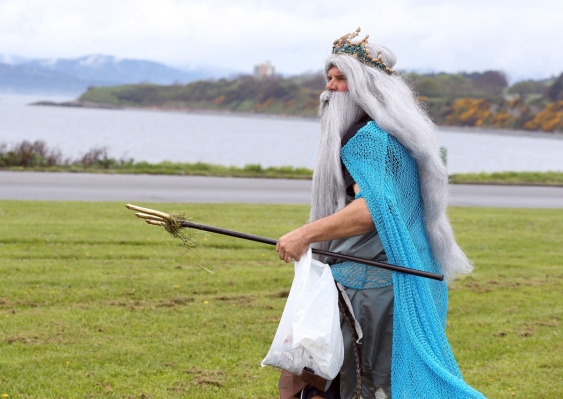 (left) Brett Soberg of Eagle Wing Tours, dressed up as King Neptune, was out with a team picking up garbage for the Earth Day Showdown on Friday. Local businesses took part in the event, collecting refuse around town.
/ Pedro Arrais, Victoria Times Colonist / April 21, 2013
/ Yvonne Robertson, Richmond News / April 19, 2013
/ Laura Hrastar, weescribble.com / April 13, 2013
/ Chris Dunagan, The Kitsap News / April 5, 2013
/ Lynda Mapes, The Seattle Times / March 31, 2013
/ Gary Chittim, KING 5 News (NBC Seattle) / March 14, 2013
Gray Whales Are In! Sound and Straits Get Annual Visit from Journeyed Behemoths / PWWA Press Release / March 11, 2013
/ Discovery News / Feb 11, 2013
/ Kevin Dolak, Yahoo! News and ABC News Good Morning America / Jan 10, 2013
/ BBC News / Jan 9, 2013
/ Christopher Dunagan, Kitsap Sun / Jan 5, 2013
/ Jenny Atkinson, Executive Director of The Whale Museum, The San Juan Islander / Dec 22, 2012
/ Jenny Atkinson, Executive Director of The Whale Museum, The Island Guardian / Dec 21, 2012 (left) Krista Rekos, mother of six-year-old Newtown, CT shooting victim and orca lover Jessica Rekos. "I am speechless after reading your article, knowing that Jessica inspired these groups to do something to honor her and her love of whales."
/ Larry Pynn, Vancouver Sun / Dec 21, 2012
/ KING 5 News and NBC News / Dec 20, 2012
Let's Name the Next Baby Orca "Jessica" / PWWA Press Release / Dec 19, 2012
- A boater who was caught by the Coast Guard too close to Puget Sound killer whales won't be penalized, but next summer violators could be fined thousands of dollars. / The Associated Press / Aug 16, 2012
BEST. NEWS. EVER.
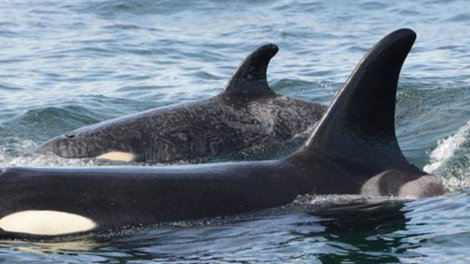 A73, or "Springer," returned to the Sound and Straits in July 2013 with a baby in tow! The Pacific Whale Watch Association (fthen the Whale Watch Operators Association Northwest) was a big supporter of the historic 2002 effort to rescue and return this orphaned, sickly two-year-old Northern Resident orca stuck in the waters off Seattle, WA back to her family 250 miles north in British Columbia. It would prove to be the first-ever successful repatriation of a wild killer whale, and it captured the imagination of the world. And with news of the birth of Springer's first calf this year, it's now an unequivocal, quantifiable humanitarian and wildlife conservation success. PWWA is proud to have helped make it happen. Early in the debate, we teamed up with conservation groups like Orca Conservancy and the
  Free Willy-Keiko Foundation in pressing the feds for immediate intervention to save Springer. And once NOAA Fisheries gave the green light, we helped raise money and source other critical materials and personnel for the project. We volunteered our time and our boats, our hearts and souls, from Fauntleroy to Dong Chong Bay, Hanson Island. Our Association President at the time, Capt. Mike Bennett (right), even drove the Nichols Brothers' 144-foot catamaran that got Springer home. It was an exciting and at times hair-raising experience, but for many of us a memory that'll last a lifetime. / For information about Springer and how to help, contact on Hanson Island, BC.
/ Q13 FOX News / 7/8/13
/ CBC News / 7/8/13
/ Environmental Specialist Gary Chittim, KING 5 News (NBC Seattle) / January 1, 2014
/ Amy Judd, Global News / December 31, 2014
/ CTV News / December 31, 2014
(below) KIRO 7 Eyewitness News (CBS Seattle): New Year's Baby in J-Pod! / December 30 and 31, 2014.
/ Environmental Specialist Gary Chittim, KING 5 News (NBC Seattle) / December 8, 2014
/ CBC News / December 6, 2014
/ Mike Clarke, CBC News / September 28, 2014
/ CHEK News / September 28, 2014
/ KSDK TV (NBC St. Louis) / September 28, 2014
/ Environmental Specialist Gary Chittim and Ashley Stewart, KING 5 News (NBC Seattle) and NorthWest Cable News (WA, OR, AK, ID and MT) / September 26, 2014
/ Mary Griffin, CHEK News / August 29, 2014
/ Libby Denkmann, KIRO Newsradio / June 27, 2014
/ Environmental Specialist Gary Chittim, KING 5 News (NBC Seattle) / June 25, 2014
/ John Hopperstad, Q13 FOX Weekend News (FOX Seattle) / June 25, 2014
/ Chris Legaros, KIRO 7 News (CBS Seattle) / June 25, 2014
/ Louise Hartland, CTV News / June 23, 2014 /
/ Q13 FOX News (FOX Seattle) / June 13, 2014
(above) "MJ's Photo: World's Oldest Orca" / Q13 FOX News (FOX Seattle) / 5/16/14
/ CBC News / 5/13/14
(Above) / New Day Northwest (NBC Seattle) / 4/24/14
(Above) / Gary Chittim, KING 5 News at 5pm (NBC Seattle) / 4/22/14
/ KING 5 News at 6:30pm (NBC Seattle) / 4/22/14
/ KING 5 News at 10pm (NBC Seattle) / 4/22/14
/ KING 5 News at 11pm (NBC Seattle) / 4/22/14
/ Jeff Burnside, KOMO 4 News at 11pm (ABC Seattle) / 4/22/14
/ KBOI News (CBS Anchorage) / 3/5/14
/ Louise Hartland, CTV News / 3/4/14
/ Global BC's "Unfiltered With Jill Krop" / 2/14/14
/ Environmental Specialist Gary Chittim, KING 5 News (NBC Seattle) / 1/24/14
/ Stacy Ross, CHEK News / 1/22/14
/ Eric Zerkel, The Weather Channel / 1/2/14
/ Katia Hetter, CNN Travel / 1/2/14
/ CTV News / 11/27/13
/ Amy Judd, Global TV / 11/27/13
/ CBC News / 11/27/13
/ Gary Chittim, KING 5 News (NBC Seattle) / 11/18/13
/ Allen Shauffler, Al Jazeera / 11/18/13
/ Rob Maguire, BC Ferry Passenger / 11/3/13
featuring Prince of Whales Whale Watching in Victoria, BC / Tess van Straaten, CHEK News / 9/11/13
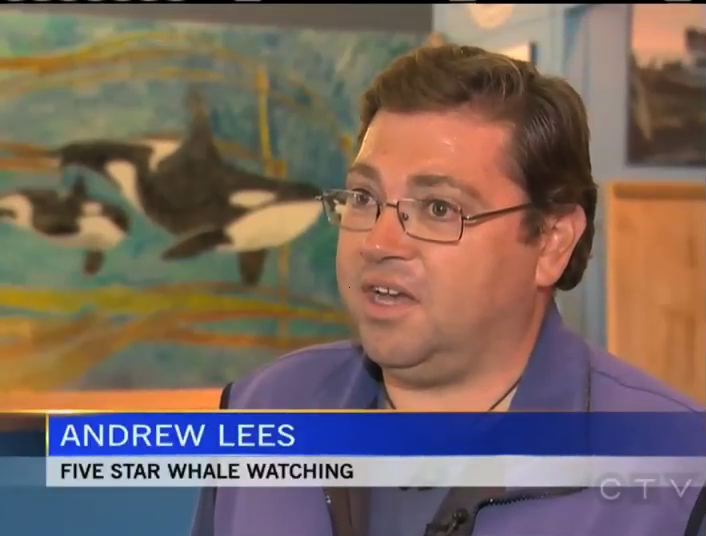 Capt. Andrew Lees, Member Owner of Five Star Whale Watching, appears on CTV sharing insights on a spectacular visit of seal-hunting transient orcas off Victoria's Ogden Point.
/ CTV News / 9/7/13
featuring First Mate and Marine Biologist Mika Ogilvie of Prince of Whales / Amy Smart, Victoria Times Colonist Video / 8/21/13
/ CTV News / 8/21/13
/ ABC World News With Diane Sawyer / 11/27/13
 Shane Aggergaard, Member Owner of Island Adventures,
talks whales with veteran broadcast journalist Allen Shauffler,
Seattle Bureau Chief for Al Jazeera America.
/ Q13 FOX News (FOX Seattle) / 7/8/13
/ Q13 FOX News (FOX Seattle) / 6/25/13
featuring PWWA Science Advisor Anna Hall, PhD. / Monica Martinez, CHEK News / 6/12/13
/ ABC News / 6/11/13
/ KOMO 4 News (ABC Seattle) / 6/11/13
/ The Province, CBC News and Global TV / 6/8/13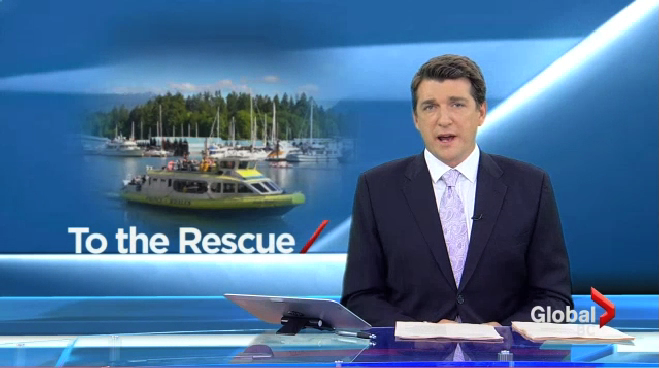
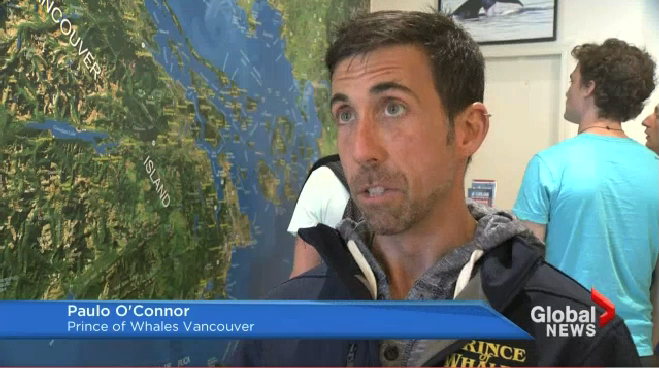 (left) Paul OConnor, MSc. appears on Global BC News on the Prince of Whales crew rescue of a family from a burning boat.
/ Jeff Burnside, KBOI Television (CBS Boise) / May 22, 2013
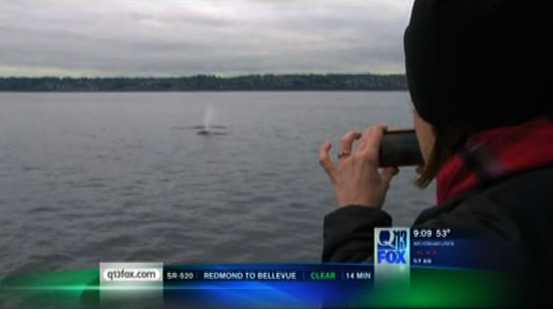 (left) Q13 FOX News Meteorologist off Everett, WA with Island Adventures Whale Watching / 4/5/13
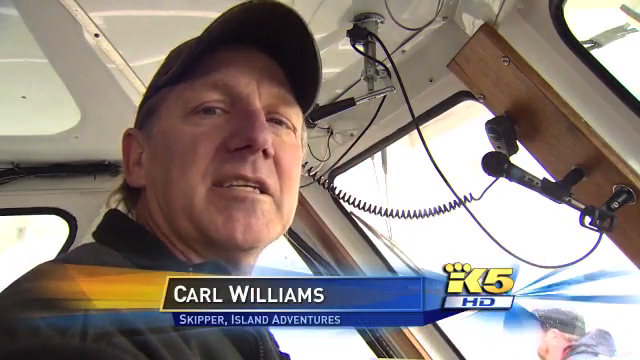 featuring Capt. Carl Williams and Capt./Naturalist Michael Colahan, MSc. of Island Adventures Whale Watching / Gary Chittim, KING 5 News (NBC Seattle) / 3/14/13
 / KING 5 News and NBC News / 12/20/12

PWWA PRESS RELEASES
##
FOR IMMEDIATE RELEASEContact: Michael Harris, Executive Director,Pacific Whale Watch Association /September 10, 2015PWWA Crew Responds to Diver in Respiratory Distress off Orcas Island, Possibly Saving His LifeOn the 14th anniversary of 9/11, it’s good to remind folks of the quiet heroism of emergency professionals everywhere. In Washington’s San Juan Islands, heroes come by land and sea.A whale watch crew from Outer Island Expeditions responded Sunday to the emergency call of a vessel off Orcas Island, assisting a scuba diver in serious respiratory distress and possibly saving his life.“We were coming back from watching whales around Cypress Island and heard the call on channel 16. We got the coordinates and knew were just a few minutes away, so we were en route immediately and on the scene in about three minutes,” explains Capt. Bryce Hamilton of Outer Island Expeditions, who’s also a Battallion Chief of EMS Training for Orcas Island Fire & Rescue and veteran firefighter and paramedic. “He was in pretty bad shape – pale, breathing rapidly and coughing up blood. It’s a condition known as tachytnia. Every minute was critical.”Coordinating with the U.S. Coast Guard, Airlift Northwest and his colleagues at Fire & Rescue, Hamilton and his crew, as well as one of their whale watch passengers who happened to be a nurse, loaded the patient onto the Blackfish Express and got him to the dock and a waiting ambulance within minutes. He was then brought to nearby Orcas Island Airport and immediately airlifted to Harborview Medical Center in Seattle. Hamilton estimates that the patient was being treated at Harborview within 45 minutes of the original distress call.“We don’t have a hospital on Orcas Island so we’ve developed a great network of community resources to respond to crises like this,” explains Chief Miklos Preysz of Orcas Island Fire & Rescue. “And this was a perfect example of that. Bryce and his crew did an excellent job – and of course we’re very fortunate that he’s a Battallion Chief as well as a whale watch captain, and really that these whale watch boats have emergency-trained people on the water every day. There’s a lot of talent out there.”Hamilton’s boat happened to be full of whale watch passengers that day, none of whom complained about being part of the rescue on Sunday.“In fact, when these things happen passengers are eager to help,” Chief Preysz continues. “It’s exciting for them to be a part of an effort like this. It’s life-changing really. In this case, they started the day watching whales, and then watched their crew help save someone’s life.”Chief Preysz notes that the emergency community in the San Juan Islands regularly rely on the help of Pacific Whale Watch Association (PWWA) crews in responding to crises. Just a month ago, his department called on Outer Island Expeditions to help put a fire out on Patos Island.PWWA crews have been on hand to respond to several incidents over recent years. On June 13th of last year, BC-based Salt Spring Adventure Co. responded to a mayday call a 45-foot pleasure boat engulfed in flames, saving a young couple and their dog. Ten days later, Five Star Whale Watching out of Victoria rescued a man who had fallen out of his kayak south of Trial Island, BC. He had been in the water for about 15 minutes and was hypothermic. They likely saved his life. In June of 2013, a whale watch crew from Maya’s Legacy Whale Watching on San Juan Island plucked two kayakers from the frigid waters of Haro Strait, one of them also suffering from life-threatening hypothermia. Two days later, a boat operated by BC-based Prince of Whales Whale Watching rescued a family from a burning boat in the Strait of Georgia.“We’re not just watching whales and wildlife out there, we’re watching out for everyone,” explains Michael Harris, Executive Director of PWWA, which represents 34 operators in Washington and British Columbia. “It’s a very good thing people like Capt. Bryce are out there.”HOW TO HELP: For all those who want to help the whales, become a Member of The Center for Whale Research! The Pacific Whale Watch Association is proud to be a longtime supporter of Ken Balcomb and his team. Help them help the whales.
##
FOR IMMEDIATE RELEASEContact: Michael Harris, Executive Director, Pacific Whale Watch AssociationSeattle cellMonday, September 7th, 2015Crews from the Pacific Whale Watch Association (PWWA) spotted a new calf today in L-Pod, one of three resident pods in Puget Sound’s endangered Southern Resident Community. The baby, dubbed L122 by the Center for Whale Research, is the first born to L91, a 20-year-old female.This is the 5th calf born since December 30th into “the Class of 2015,” as whale watchers are now calling the Southern Resident babies — the population stands at 82 members, with its 83rd, Lolita, now in Miami Seaquarium.“The baby boom continues,” explains Michael Harris, Executive Director of Pacific Whale Watch Association, which represents 34 operators in Washington and British Columbia. “And it’s so great to have L-Pod bring another new calf into the population. We’ve had a lot of hope with L-Pod and some of their females coming into reproductive age. We had a good year last year for Chinook, and so far a great year for orcas. We’re seeing that more fish means more blackfish.”Longtime naturalist Jeanne Hyde of Maya’s Legacy Whale Watching was one of the first to see the calf — on Hyde’s birthday. “This was a pretty special birthday for Jeanne,” said Capt. Jim Maya. “To be able to see this baby in L-Pod today, another sign that maybe this population that means so much to her has finally turned a corner."As with all wild orca births, whale watchers are cautiously optimistic. About half of all orca calves die within the first year. “It’s a coin-flip, really,” continues Harris. “But all four babies born this year are doing great, and they’re through their toughest patch. And this calf looks awesome. So we’ve got a lot of hope for this little whale.”
FOR IMMEDIATE RELEASEContact: Michael Harris, Executive Director,Pacific Whale Watch Association /September 2, 2015NEW PHOTOS AVAILABLE!PWWA Crews Report Four Southern Resident Calves Still Doing Well(left) Seven-month-old J-Pod calf J51 with his mother J41 off the west side of San Juan Island. Photo: Naturalist Andy Scheffler, Vancouver Whale Watch, Steveston, BC.When it comes to the youngest members of the Southern Resident Community, good news is happily repeated – as reported in the last several “PWWA Baby Orca Updates,” every one appears to be doing great. Crews from the Pacific Whale Watch Association are reporting frequent sightings over the last month of J50, J51, J52 and L121 – dubbed “the Class of 2015” by PWWA operators – and all seem to be thriving.The “media star” of the four babies, J50, the only female and the first born to the “class,” continues to charm whale watchers and photographers with her rambunctious behavior and seeming joie de vivre. But the boys are also starting to assert their personalities, particularly J51, known by some as the “Valentine’s Day Baby,” as he was seen for the first time by PWWA crews on February 13th of this year.“J51 is pretty special to us,” explains Capt. Dan Wilk of Orcas Island Eclipse Charters, now in its 25th year in the Association. “J50’s mother is J16, an experienced 43-year-old mother who’s had four calves already. She’s the oldest whale to give birth in the Southern Residents and a great mom. But J51 was born to J41, the youngest mother out there, just 10 years old when she had this baby. Orcas usually start giving birth when they’re about 13 or 14. So all of us had some concerns about the mother and the calf. But both are doing very well and we’re thrilled.”Capt. Wilk has a particular affinity for J41 – her nickname is “Eclipse,” named after his company.“The other two calves are a little more low-key than the first two born of this group,” explains Michael Harris, Executive Director of PWWA, which represents 34 operators in Washington and British Columbia. “We’re definitely seeing them out there and they look great, but they’re not quite as boisterous as J50 and J51. No belly-flop baby breaches, not a lot of jostling around with their siblings or above-surface vocalizations. They just appear to be hanging close to their mamas and families and going about the business of learning how to be big orcas. And there are no better teachers than in the Southern Resident Community.”“It definitely takes a village to raise a killer whale, and we’ve got the best village in the world out there.”(right) Nine-month-old J50 last week with her brother J26 off Discovery Island, BC. Photo: Andrew Less, Five Star Whale Watching of Victoria, BC.These Southern Resident orca calves have buoyed hopes that the population, listed as endangered under the Endangered Species Act (ESA) and in Canada under the Species at Risk Act (SARA), have finally turned the corner. After almost three years without a successful birth, the local pods had a “baby boom,” with four calves born since December. Their numbers are back up to 81, with an 82nd member, the L-Pod whale Lolita, now in Miami Seaquarium.HOW TO HELP: For all those who want to help the whales, become a Member of The Center for Whale Research! The Pacific Whale Watch Association is proud to be a longtime supporter of Ken Balcomb and his team. Help them help the whales.
FOR IMMEDIATE RELEASEContact: Michael Harris, Executive Director,Pacific Whale Watch Association /June 25, 2015
NEW PHOTOS RELEASED!Campaign Launched by Orcas Island Whale Watchers to Make the World’sOldest-Known Killer Whale the Oldest Mayor in the United StatesRespect your Granny!The oldest known killer whale in the world is now running for Mayor. J2, also known as “Granny,” has been tapped to run for the office of Honorary Mayor of the Village of Eastsound, WA, on Orcas Island. If elected, the orca – thought by researchers to be 104 years old this year – will also be the oldest elected official in North America.Only in the San Juan Islands, right?Some might also say that only on an island named Orcas would an orca become Mayor – however, Orcas Island was actually named after Juan Vicente de Güemes Padilla Horcasitas y Aguayo, 2nd Count of Revillagigedo, the Viceroy of Mexico who sent an exploration expedition to the region in 1791. But with all due respect to the Viceroy, Orcas might as well be named for the whale – the Island is a great destination for whale watching, with three Pacific Whale Watch Association companies running tours there.One of those tour companies is Capt. Tom Averna’s Deer Harbor Charters, a sponsor of the “Granny for Mayor” campaign, which is a fundraiser for the toddler and preschool programs at Orcas Island Children’s House.“We’re honored to sponsor this,” explains Averna, who’s been running whale watch tours since 1988. “Not only to support the cause and to show what an eclectic island community we live in, but also to bring awareness to the plight of the Southern Resident population and the challenges they’re facing now. Most islanders here are aware of Granny, her age and her history. They consider her a part of this island family.”The population is listed as endangered in the U.S. under the Endangered Species Act and in Canada as a Species at Risk. The Southern Residents dipped to 77 individuals last December, but have experienced something of a baby boom, having four calves born into the community since then. All appear to be doing well. And Granny, the matriarch of matriarchs, continues to lead the pods. Their numbers now stand at 81, with an 82nd member, Lolita, in Miami Seaquarium.“Even for longtime whale watchers, we’re just stopped in our tracks when we see an animal like J2, who’s well over 100 years old, traveling over 100 miles a day, leading the pods, helping to babysit for these rambunctuous little calves born a century after she was,” explains Michael Harris, Executive Director of the Pacific Whale Watch Association (PWWA), which represents 32 operators in Washington and British Columbia. “Both of my grandmothers lived a very long time, and they were energetic until the very end, but I couldn’t imagine them traveling and caring for babies like that in those golden years. These orcas are pretty special creatures.”The Granny for Mayor campaign was the brainchild of Orcas Island resident Alex Callen. "It felt right,” he explains. “Raise funds for the toddler and preschool programs while raising awareness about the Southern Resident Orca population. People were surprised Granny hadn't run before. I love the old girl! She is an icon of the San Juan Islands."Another whale watch option on Orcas Island is Orcas Island Eclipse Charters, a founding member of PWWA, just steps away from the ferry terminal. And if you’re there, also check out the Orcas Wildlife Institute for Learning and Discovery, launched by PWWA operator Outer Island Excursions and located at 217 Main Street in Eastsound. This new interpretive center has installments created by highly trained and educated whale naturalists on everything from intertidal life to whale migration patterns to a touch pad of different orca vocalizations. The Center is a fun and educational place where locals as well as tourists can come to glean information about our amazing ecosystem in the San Juans.HOW TO HELP: For all those who want to help the whales, become a Member of The Center for Whale Research! The Pacific Whale Watch Association is proud to be a longtime supporter of Ken Balcomb and his team. Help them help the whales.
#
FOR IMMEDIATE RELEASEContact: Michael Harris, Executive Director,Pacific Whale Watch Association /June 22, 2015SAFETY ALERT!Summer Months Bring Sea Kayakers and Orcas Together in the Islands; PWWA Crews Urge Paddlers to Play it Safe and Follow Guidelines(left) Sea kayakers amongst whales in the San Juan Islands. Photo: Erik Shorr, Anacortes Kayak Tours.Rule of thumb – whales are bigger than kayaks.As summer season begins and all three pods of the Southern Resident Community of orcas return to the Salish Sea, so do sea kayakers. Seeing whales from a kayak can be an exhilarating, life-changing experience. If you’re not careful, it can also be a life-threatening one.It may feel like tee-shirt weather atop the kayak this time of year, but temperatures below are definitely wetsuit – about 52 degrees F./11 degrees C. Even a short amount of in the water can bring on hypothermia.“There’s really nothing like being out there paddling along in the San Juan Islands or off Victoria and coming across orcas, or even a humpback whale,” explains Michael Harris, Executive Director of the Pacific Whale Watch Association (PWWA), which represents 32 operators in Washington and British Columbia. “But we’ve seen those oohs and ahs turn into oh nos awfully fast when people don’t follow the proper rules. Sea kayaking in these waters is an amazing experience, especially if you come across wildlife out there, and it can be done safely – if you book that trip with the right company.”PWWA has two highly experienced, safety trained operators currently conducting sea kayak tours in Orca Country – San Juan Safaris out of Roche Harbor in the San Juans, and Anacortes Kayak Tours."Seeing whales from a sea kayak can be one of the most thrilling experiences available to people visiting our region,” explained Erik Shorr of Anacortes Kayak Tours. “Being so close to the water, and traveling under our own power, we’re able to hear every breath and every splash they make. However, it’s very important to respect the whales’ space and for us to stay aware of our surroundings during an encounter. If you’re new to this, keep it safe and choose a quality service that can manage all the details and allow you to just relax and enjoy your time out there. There are lot of good companies to choose from, but members of the PWWA like Anacortes Kayak Tours and San Juan Safaris lead the industry in professional guide training and have decades of combined experience in sea kayaking in the San Juan Islands, including what to do when you come across whales.”So what do you do? PWWA and commercial kayak companies in conjunction with San Juan County Parks, NOAA Fisheries, Washington Department of Fish & Wildlife, and the Soundwatch Boater Education Program have come up with voluntary guidelines for kayak behavior around orcas. They were created based on best available science, known wildlife protocol and respect for wildlife, and the precautionary principal.Four easy rules are to be followed:1.) When orcas are present, kayaks should make their way to the nearest shoreline and raft up, forming one footprint with all the kayaks nestled together.2.) If surprised by orcas and kayaks are unable to reach the nearest shore without paddling through the whales (against federal law), the protocol is to raft up in place and wait for whales to pass before proceeding on the planned route.3.) NEVER paddle with whales within 200 yards unless weather, tides, ocean conditions create an environment where safety of equipment and human life is in danger.4.) NEVER intentionally position kayaks in the path of killer whales.(above) Sea kayakers with a humpback whale in the San Juan Islands. Photo: Erik Shorr, Anacortes Kayak Tours.The U.S. Coast Guard reported 610 deaths last year in kayaking accidents, mostly due to hypothermia or drowning from capsizing. Kayakers represent 22% of all boating fatalities reported last year, second only to those in open motorboats, which make up 46 percent. Twenty-two kayak deaths and 67 injuries were reported last year in Washington State alone.PWWA crews have been on hand to respond to several incidents over recent years. On June 23rd of last year, Five Star Whale Watching out of Victoria rescued a man who had fallen out of his kayak south of Trial Island, BC. He had been in the water for about 15 minutes and was hypothermic. They likely saved his life. And in June of 2013, a whale watch crew from Maya’s Legacy Whale Watching on San Juan Island plucked two kayakers from the frigid waters of Haro Strait, one of them also suffering from life-threatening hypothermia.Crews aren’t just watching whales and wildlife out there, they’re watching out for everyone. But when kayakers get distracted, especially inexperienced ones, they often discover quickly that what they’re watching is far bigger and stronger than a 20’ piece of floating fiberglass, and the water they’re in not quite easy as it looks to traverse with paddle.“Hey, I’ve done the same thing,” Harris continues. “I’ve been out there in Haro Strait, cruising along with orcas a couple hundred yards away, connecting one-to-one with the whales, not paying attention to the currents like I should. And then all of sudden, you realize you’re not an orca. You’re a mile or two away from where you should be and can’t just turn it around and head back. Or you catch yourself in some rough water and it gets sketchy. And that can turn an awesome experience into a rescue.”The rules are also to protect the whales, particularly the endangered Southern Residents with four babies born in the last six months. PWWA naturalist Traci Walter recently posted video of J-Pod mother J36 and her calf J52 coming across kayakers off the west side of San Juan Island (). The baby appeared curious and to want to approach the kayakers, but her mother wouldn’t have any of it. She repeatedly nudged the calf in the other direction, away from people. Meanwhile, the kayakers did exactly what they were supposed to do – they rafted together, and then headed toward shore, allowing the whales to safely pass.If everything goes like that, it should be an uneventful summer for whale watchers. And that’s how PWWA likes it.HOW TO HELP: For all those who want to help the whales, become a Member of The Center for Whale Research! The Pacific Whale Watch Association is proud to be a longtime supporter of Ken Balcomb and his team. Help them help the whales.
FOR IMMEDIATE RELEASEContact: Michael Harris, Executive Director,Pacific Whale Watch Association /June 1, 2015PWWA BABY ORCA REPORTSouthern Resident Orca Calf L121 – Once Feared Lost by Some Experts – Emerges
Today Off British Columbia Coast With Family(left) Three-month old orca calf L121 with mother L94, seen today off Tofino, BC. Photo: Marcie Callewaert, Victoria Marine Science Association.The Southern Resident “Class of 2015” is at last all accounted for – L121 has been spotted.After almost three years without a successful birth, the Southern Residents had something of a baby boom, with four births since late December. The other three calves, all in J-Pod, have been seen frequently in the Sound and Straits over the last several months. But the last sightings of L-Pod, off the coast of Oregon by NOAA Fisheries scientists, could not confirm a sighting of the calf. Many experts feared it was lost.Former SpringTide Whale Watching naturalist Marcie Callewaert, now with Victoria Marine Science Association, reported tonight that she “just spent a couple hours with L-Pod from Cox Point to Long Beach, near Tofino, BC. L121 was present and as energetic as ever!”L-Pod is considered the most precarious of the three Southern Resident pods. A baby born to the pod last summer, L120, was lost off the coast of British Columbia during a storm last October. In February 2012, the three-year-old female L112, a popular subject among researchers, washed up dead off the coast of Washington. It wasn’t until late February of this year that another calf was seen in L-Pod. Today’s report indicates this one may very well stick.With the new additions, the local orca population now stands at 81, with its 82nd member being the captive orca Lolita, now in Miami Seaquarium.“We’re thrilled of course,” explains Michael Harris, Executive Director of the Pacific Whale Watch Association (PWWA), which represents 32 operators in Washington and British Columbia. “Many of us had concerns about this little whale, not just because of the problems L-Pod have had in recent years but generally the odds baby orcas have out there. We always remind people that wild killer whales have a 50% mortality rate – half don’t make it through their first year. And just in its first few months in life, this baby had a lot of big water to battle. We’re not out of the woods yet, but we’re definitely starting to see some daylight through the trees.“Getting this news is another shot of hope,” Harris continues. “I’m one of those who think that the Southerns have finally turned the corner. We’ve got a real chance of bringing these whales back. And hey, maybe L121 is that poster child of orca recovery – if that baby whale can make it, this population can.”HOW TO HELP: For all those who want to help the whales, become a Member of The Center for Whale Research! The Pacific Whale Watch Association is proud to be a longtime supporter of Ken Balcomb and his team. Help them help the whales.
#
FOR IMMEDIATE RELEASEContact: Michael Harris, Executive Director,Pacific Whale Watch Association /March 30, 2015NEW PHOTOS AVAILABLE!Pacific Whale Watch Association Crews Report Another Birth Today in Southern Resident Community, Its Fourth Calf in Three Months – Confirmed by Center for Whale Research(left) Newborn J-Pod calf seen today near Active Pass, BC. Photo: Naturalist/Researcher Jeanne Hyde, Maya’s Legacy Whale Watching.The baby boom continues in Orca Country.Pacific Whale Watch Association (PWWA) crews report today a new calf spotted among the endangered Southern Resident Community, the population’s fourth baby in three months. The birth was confirmed tonight by the Center for Whale Research.Naturalist/researcher Jeanne Hyde was onboard with Capt. Spencer Domico of Maya’s Legacy Whale Watching shortly after noon today watching the subgroup J16s with their three-month-old calf J50 off Galiano Island, BC.“We were assuming we had only the J16s,” recounts Hyde. “And as they passed in front of the boat I saw a small calf surfacing next to J16 and said, ‘there’s the baby.’ But then J50 surfaced behind all the rest. That’s when I told Spencer, ‘I think there are two calves!”The crew noted heavy fetal folds on the baby, which indicates that it was newborn.Also out today with the newest addition to the Southern Resident Community were Capt. Jim Maya of Maya’s Legacy Whale Watching on San Juan Island, and Capt. Mark Malleson of Prince of Whales of Whales Whale Watching in Victoria.“J-Pod is certainly doing all it can to rebuild the ranks,” explains Michael Harris, Executive Director of the PWWA, which represents 29 whale watch operators in Washington and British Columbia taking out about a half-million passengers a year. “The Southern Residents are a long way from being out of the woods, these calves too, but this is great news. We’re going to keep a careful watch on these babies and our fingers crossed – and of course continue to do everything we can to rebuild these salmon runs and feed these whales. There’s still a lot of work to be done, but it’s pretty clear the efforts PWWA and so many other groups are undertaking on both sides of the border on salmon recovery is taking us in the right direction. Let’s hope this baby boom means these endangered population has finally turned the corner.”This latest addition would bring the Southern Residents to 81 individuals, with its 82nd member, the L-Pod whale Lolita, now in Miami Seaquarium.HOW TO HELP: For all those who want to help the whales, become a Member of The Center for Whale Research! The Pacific Whale Watch Association is proud to be a longtime supporter of Ken Balcomb and his team. Help them help the whales.
#
FOR IMMEDIATE RELEASEContact: Michael Harris, Executive Director,Pacific Whale Watch Association /May 8, 2015NEW PHOTOS AVAILABLE!SPECIAL MOTHERS DAY WEEKEND REPORT…PWWA Crews Report J-Pod Babies Still Doing Well; Awaiting News on L-Pod BabyBiggest Mother in the Salish Sea – the “Comeback” Humpback “Big Mama” – Also Visiting onMothers Day Weekend, Making for Spectacular Whale Watching(left) Three-month-old J-Pod calf J52 with 16-year-old mother J36 on May 1st off the west side of San Juan Island. Photo: Capt. Jim Maya, Maya’s Legacy Whale Watching.Happy Mothers Day, whales!Usually, mothers get presents this time of year, but in the Salish Sea now, moms are bringing gifts to whale watchers.The Sound and Straits are bristling with maternal bliss, with all three orca babies from J-Pod making regular appearances – along with the biggest mother in these waters, the humpback whale known as “Big Mama.”Researchers are still anxiously awaiting news on the L-Pod calf L121, who’s out on the coast, “but the three J-Pod babies look great,” reports Michael Harris, Executive Director of the Pacific Whale Watch Association (PWWA), which represents 31 operators in Washington and British Columbia. “They seem healthy and energetic, and as my mom likes to say, ‘growing like weeds.’ They’re even losing that peach coloring on their white patches, which newborns have. Pretty soon I guess we’ve got to stop calling them ‘babies.’ They’re fast becoming ‘juvies,’ as we say, juveniles. And as every month passes, the chances get better that they’ll survive this first critical year. They’re in no way out of the woods, but we can definitely see the light through the trees.”The “Class of 2015,” as whale watch crews are calling these Southern Resident orca calves, have buoyed hopes that the population, listed as endangered under the Endangered Species Act (ESA) and in Canada under the Species at Risk Act (SARA), have finally turned the corner. After almost three years without a successful birth, the local pods have had a “baby boom” of late, with four calves born since December. Their numbers back up to 81, with an 82nd member, the L-Pod whale Lolita, now in Miami Seaquarium.FLUKE UP! “Big Mama” waves to whale watchers off San Juan Island on Monday. Photo: Naturalist Andy Sheffler, Vancouver Whale Watch.Big Mama (right) also is a sign of hope for whale watchers. She’s become an ambassador of sorts for the “Humpback Comeback,” the return of humpback whales to the region after disappearing for decades, extirpated by commercial whaling.“She’s never missed a year here since 2003,” says Capt. Mark Malleson of Prince of Whales Whale Watching, who also is a research assistant for the Department of Fisheries and Oceans (DFO) Canada and the Center for Whale Research on San Juan Island. “She’s brought five of her calves in here, and she’s really expanded her range. We used to only see her off Victoria. Now we see Big Mama regularly off San Juan Islands, throughout the Salish Sea, and she’s introducing the area to other whales. We love our orcas here, but having this humpback comeback has been really exciting.”“I can’t imagine a better way to spend Mothers Day weekend than with the best moms in the animal kingdom,” adds Harris. “And it’s not just great whale watching, it’s a great whale story – we’re seeing nature bouncing back. Humans are definitely helping, but I think that has a lot to do with just good mothering.”HOW TO HELP: For all those who want to help the whales, become a Member of The Center for Whale Research! The Pacific Whale Watch Association is proud to be a longtime supporter of Ken Balcomb and his team. Help them help the whales.
#
FOR IMMEDIATE RELEASEContact: Michael Harris, Executive Director,Pacific Whale Watch Association /April 29, 2015Pacific Whale Watch Association Member and ACE Hardware Stores Launch Initiative for “Orca Friendly” Products(left) An endangered Southern Resident orca spyhops in Haro Strait. Photo: Capt. Hobbes Buchanan, San Juan Island Whale & Wildlife Tours.Are the products you use at home “Orca Friendly”?A new initiative has been launched by longtime Pacific Whale Watch Association (PWWA) operator and clean water advocate Capt. Hobbes Buchanan and ACE Hardware stores in Friday Harbor and Anacortes, WA, to bring awareness to consumers about how the things they buy and use effect endangered Southern Resident orcas.Buchanan, who owns San Juan Island Whale & Wildlife Tours out of Friday Harbor, doesn’t just look for whales for a living; like many PWWA operators he’s constantly looking for ways those of us on shore can help the ocean’s top predators.“We can’t just watch the whales, we have to watch out for them,” explains Buchanan. “And this is a great place to start. These iconic orcas need our help. They’re in trouble and that’s largely due to toxins. If we keep the water clean, the forage fish will thrive and so will the salmon. When the salmon thrive, so will the orcas. When the oceans thrive, so will we."(right) Capt. Hobbes out with orcas.The Southern Residents are protected under the U.S. Endangered Species Act and in Canada under the Species at Risk Act. Four births have been reported since December, bringing their numbers back up to 81 individuals, with an 82nd member, the L-Pod whale Lolita, now in Miami Seaquarium. Some feel they’ve finally turned the corner, but in no way are they out of the woods yet. This summer will be a critical one for the population.“We’re going to start by putting ‘Orca Friendly Products’ sections in our stores in Friday Harbor and Anacortes, non-toxic alternatives for the home and business, and then see if we can branch this idea out to other ACE Hardware stores,” explains Donny Galt, General Manager. “We’ve always carried a wide range of green products, but now our customers will see a ‘superpod’ of ACE's biodegradable lawn, garden and cleaning products all gathered in one section. We’re very excited about this partnership.”Consumers now can look to see if something is Orca Friendly, much as people buying tuna can see if it’s “Dolphin Safe.”“It just reinforces the message that ACE and the whale watch community want to send,” continues Galt. “When it comes to recovering these orcas we have to do everything we can, including making sure the things we buy and use in our homes protect their homes, too.”HOW TO HELP: For all those who want to help the whales, become a Member of The Center for Whale Research! The Pacific Whale Watch Association is proud to be a longtime supporter of Ken Balcomb and his team. Help them help the whales.
FOR IMMEDIATE RELEASEContact: Michael Harris, Executive Director,Pacific Whale Watch Association /March 28, 2015NEW PHOTOS AVAILABLE!Pacific Whale Watch Association Crews Report Both J-Pod Babies Appear “Lively and Rambunctious” – Center for Whale Research Still Waiting on L-Pod Calf to Return to Salish Sea(left) J-Pod calf J50 with her sister J42 near Open Bay, off the west side of San Juan Island. Photo: Capt. Jim Maya, Maya’s Legacy Whale Watching.The latest baby pictures and reports are in and so far the news from Orca Country remains good – the newest additions to the endangered Southern Resident Community of orcas seem to be doing fine.Pacific Whale Watch Association (PWWA) crews observed the two three-month-old J-Pod babies J50 and J51 in the waters around the San Juan Islands and they appear to be “lively and rambunctious,” according to whale watchers, breaching and frolicking and, according to PWWA Executive Director Michael Harris, “doing what baby orcas do.”The last report on the six-week-old L-Pod calf L121 by NOAA Fisheries scientists from off the Washington coast was also good. However, the Center for Whale Research is awaiting new photos to confirm that the youngest member of the Southern Residents, born to a pod that has lost several newborns over the last few years, is still thriving.“At this point, we’ll definitely take two great reports and one ‘maybe,’” explains Harris, whose Association represents 29 whale watch operators in Washington and British Columbia taking out about a half-million passengers a year. “When you’re contending with an infant mortality rate of 50% among wild orca populations, you have to keep your optimism measured. The real celebration happens when we’re a year down the road and we still have these whales among us. We’re all holding our breath waiting for L-Pod to bring that baby back to the inland waters so we can get a good look at it. But we can report now that the two J-Pod calves are looking great – in fact, downright athletic. Both of them seem to be leaping for joy out there. The breaches we’re seeing are pretty spectacular. These little whales are really getting some air beneath them!”(left) J-Pod calf J50 breaching in Haro Strait. Photo: Capt. Simon Pidcock, Ocean EcoVentures, Cowichan Bay, BC.“Both babies looked strong and healthy,” adds Valerie Shore, Naturalist for Eagle Wing Tours in Victoria. “All in all, it was a beautiful, sunny, calm day on the water with mellow whales and mellow, admiring whale watchers maintaining a respectful distance. Just what it should be like!”(right) J-Pod calf J51 with 24-year-old cousin J27. Photo: Naturalist Valerie Shore, Eagle Wing Tours.“It was lovely to see J-Pod today in the Salish Sea,” said Capt. Hobbes Buchanan of San Juan Island Whale & Wildlife Tours. “And to see the babies out there really reminds us what’s at stake. We can’t just watch whales, we have to help them. Whether it’s removing dams or restoring forage fish habitat, we’ve got to do everything we can to increase their food supply, especially the Chinook salmon, and help these orcas survive.”The “Class of 2015,” as the three Southern Resident calves are becoming known to PWWA crews, represents a wave of hope among a population that many feared was on an irreversible slide to extinction. There hadn’t been a successful birth in the community in almost three years. The recent baby boom puts the endangered population now at 80 individuals and growing, with its 81st member, the L-Pod whale Lolita, now in Miami Seaquarium.HOW TO HELP: For all those who want to help the whales, become a Member of The Center for Whale Research! The Pacific Whale Watch Association is proud to be a longtime supporter of Ken Balcomb and his team. Help them help the whales.
#
FOR IMMEDIATE RELEASEContact: Michael Harris,Executive Director, Pacific Whale Watch AssociationMarch 18, 2015Pacific Whale Watch Association Crews Report First Sighting of Saratoga Gray Whale “Patch,”His 24th Consecutive Year in Waters Off Everett(left) Saratoga gray whale “Patch” in Port Susan last Saturday. Photo: Capt. Michael Colahan, Island Adventures Whale Watching.In whale watching, you never know what to expect… except when it comes to watching gray whales each spring in northern Puget Sound.“Patch” is back!Capt. Carl Williams and Capt. Michael Colahan of Island Adventures Whale Watching have confirmed that the massive gray whale, dubbed #49 by researchers and “Patch” by whale watchers, has returned for his 24th consecutive year to the waters off Possession Point near Everett, WA.“Capt. Carl spotted a whale in the only spot that calm water was present,” reports Colahan. “We traveled way up into Port Susan and found Patch in some shallow water. What an awesome find! He hovered in about 25-30 feet of water for our entire visit, and showed his tail on every deep dive!”Pacific Whale Watch Association (PWWA) crews are now reporting the first arrivals of “the Saratoga grays,” whales who return to Saratoga Passage and the waters off southern Whidbey Island every spring to feed on ghost shrimp. According to Cascadia Research Collective, the Saratogas are part of the Great Migration of 22,000 Eastern North Pacific gray whales now underway. As spring approaches, these majestic creatures, which can reach 50 feet and 40 tons, begin a journey of between 5,000 and 6,800 miles from the warm-water calving lagoons in Mexico’s Baja Peninsula and Gulf of California to the Bering and Chukchi Seas of Alaska, traveling constantly at about five knots and averaging 75 miles per day. It’s the longest migration of any animal on Earth. Midway through the journey, a dozen or so make a pit stop in Puget Sound – for the shrimp buffet.“Only in the Pacific Northwest can you get on a whale watch boat in a city and literally in just a few minutes find yourself in the company of leviathans,” said Michael Harris, Executive Director of PWWA, which represents 29 operators in Washington State and British Columbia. “The Puget Sound region is really the only metropolitan area in the United States where you can do that, and we’ve got a number of great options for whale watchers.”The Salish Sea is known as Orca Country, but the spring gray whale watching season has become a hot ticket.“This is an exciting time of year for whale watchers,” explains Harris. “We get whales year round here, but when the big ones roll into North Puget Sound, it’s a pretty cool thing. They’re like old friends who come and hang out with us every spring. The same whales every year. To see Patch out there for the 24th consecutive year is amazing. It’s one thing to watch whales, but it’s an extraordinary thing to actually know who you’re watching. And no one introduces these individuals better than crews we have on these boats.”The Eastern North Pacific grays are also a poster child for species recovery, being the only whale population ever to be taken off the U.S. Endangered Species Act.For information on current gray whale sightings and tours:¬Island Adventures Whale Watching, Everett:Puget Sound Express, Seattle/Edmonds:Victoria Clipper, Seattle:Mystic Sea Charters, Langley:HOW TO HELP: For all those who want to help the whales, become a Member of The Center for Whale Research! The Pacific Whale Watch Association is proud to be a longtime supporter of Ken Balcomb and his team. Help them help the whales.
#
FOR IMMEDIATE RELEASEContact: Michael Harris,Executive Director, Pacific Whale Watch AssociationMarch 9, 2015Pacific Whale Watch Association Crews Report First Sightings of Gray Whales in Saratoga PassageThe “Saratoga grays” are back!Pacific Whale Watch Association (PWWA) crews are reporting the arrival of the first gray whales who return to Saratoga Passage and the waters off southern Whidbey Island every spring to feed on ghost shrimp. This year, they were a few days behind schedule, but just in time for opening weekend of the gray whale watching season.“Fashionably late,” explains Michael Harris, Executive Director of PWWA, which represents 31 operators in Washington and British Columbia. “But welcome back, whales! Mystic Sea and Island Adventures just spotted #53, who we call ‘Little Patch,’ and #723, who we call ‘Lucy,’ off Possession Point last weekend. I’m sure others are fast on their flukes.”The Great Migration of 22,000 Eastern North Pacific gray whales is well underway. As spring approaches, these massive creatures, which can reach 50 feet and 40 tons, begin an epic journey of between 5,000 and 6,800 miles from the warm-water calving lagoons in Mexico’s Baja Peninsula and Gulf of California to the Bering and Chukchi Seas, traveling constantly at about five knots and averaging 75 miles per day. It’s the longest migration of any mammal on Earth. Midway through the journey, a dozen or so make a pit stop in Puget Sound – for the shrimp buffet.“This is an exciting time of year for whale watchers,” explains Harris. “We get whales year round here, but when the big ones roll into North Puget Sound, it’s a pretty cool thing. They’re like old friends who come and hang out with us every spring. The same whales every year. It’s like clockwork. When #49 checks in, the one we call ‘Patch,’ that’ll be the 24th consecutive year he’s been identified down here.”Cascadia Research Collective has documented 42 individual whales using the area since 1990, with 11 grays seen in multiple years since 1991. In his presentation last week at the Pacific Whale Watch Association Symposium in Anacortes, WA, John Calambokidis of Cascadia described these Saratoga Passage grays, or the “Regulars,” as he calls them – at least nine males and two females – as quite an interesting group. They aren’t part of a population of several hundred known as the Pacific Feeding Group, which turn into inland waters like the Salish Sea and don’t continue the journey to the Bering and Chukchi Seas. Unlike these “resident” grays, the Saratogas head north again in June, rejoining The Great Migration.Gray whales are perhaps the most paradoxical creatures on the planet. They’ve been called “devil fish,” fierce protectors of calves and the only known whale to fight back when hunted by humans, as they were almost to extinction in the previous century. And yet in calving lagoons such as Bahia San Ignacio, Mexico, they’re known as the “friendly whales,” coming right up to small whale watch boats with their babies, allowing people to pet them. The Eastern North Pacific grays are also a poster child for species recovery, being the only whale population ever to be taken off the U.S. Endangered Species Act.For information on current gray whale sightings and tours:¬Island Adventures Whale Watching, Everett:Puget Sound Express, Seattle/Edmonds:Victoria Clipper, Seattle:Mystic Sea Charters, Langley:San Juan Island Whale & Wildlife Tours, Friday Harbor:Deception Pass Tours, Oak Harbor:Prince of Whales Whale Watching, Victoria, BC:HOW TO HELP: For all those who want to help the whales, become a Member of The Center for Whale Research! The Pacific Whale Watch Association is proud to be a longtime supporter of Ken Balcomb and his team. Help them help the whales.
#
FOR IMMEDIATE RELEASE
Contact: Michael Harris, Executive Director,
Pacific Whale Watch Association /
February 28, 2015
Pacific Whale Watch Association Hosts First-Ever Transboundary Industry Forum in Anacortes
Featuring Speakers from Federal Agencies, Research and NGOs
Invitation-Only Event is Monday, March 2nd
As salmon and orca recovery efforts ramp up and as crews from the (PWWA) continue to report unprecedented sightings of whales and wildlife throughout the Salish Sea, the time seemed right to get together and talk about it all.
On Monday, March 2nd in Anacortes, WA, whale watch captains and naturalists, researchers, educators, policy makers, conservation experts, and government agency representatives from both sides of the border will gather at the first annual Pacific Whale Watch Association Symposium.
The event will take place from 9:30am to 5pm at the Cap Sante Marina in Anacortes, WA – 601 Seafarers Way. Presenters include Ken Balcomb from The Center for Whale Research, John Calambokidis from Cascadia Research Collective, scientists from the University of British Columbia’s Marine Mammal Research Unit and NOAA Fisheries’ Northwest Fisheries Science Center, representatives from the Pacific Salmon Foundation and Long Live the Kings, enforcement officers from NOAA Fisheries, the Washington Department of Fish and Wildlife and the Department of Fisheries and Oceans Canada, the head of the Marine Trade Association, and speakers from Orca Conservancy, Orca Network, Skagit Fisheries Enhancement, and The Whale Museum.
Topics to be discussed include the latest news on local orcas – resident and transient – research on minke whales, as well as a look at the “humpback comeback,” record sightings and unusual behavior of humpback whales in the last few years. But mostly, the discussion will be on ongoing salmon recovery efforts in the Salish Sea and its implications for killer whale recovery – no fish, no blackfish.
“This is really an exceptional gathering,” explains Shane Aggergaard, owner of and U.S. President of the PWWA, which represents 31 operators in Washington and BC. “With all the news in the last couple of months with new babies among the Southern Resident orcas, together with the re-emergence of the humpback whale population here in the Salish Sea, the timing of this Symposium is perfect.”
“And since this is a Symposium hosted by PWWA and attended by so many of our captains and naturalists, we also want to hear how people think we’re doing out there on the water,” adds Michael Harris, Executive Director of PWWA who’ll be moderating the event. “Our Association has always looked to our conservation partners to give us feedback like this. And the whale watching community wants to hear what we’re all doing top-down to recover our resident orcas and the Chinook salmon they rely on, and how we can help. It’ll be a great discussion.”
HOW TO HELP: For all those who want to help the whales, become a Member of The Center for Whale Research! The Pacific Whale Watch Association is proud to be a longtime supporter of Ken Balcomb and his team. Help them help the whales.
##
FOR IMMEDIATE RELEASE
Contact: Michael Harris, Executive Director,
Pacific Whale Watch Association /
February 26, 2015
NOAA Fisheries Reports New L-Pod Addition to Endangered Southern Resident Orcas,
Third Calf in Population in Last Two Months
(below) L-Pod calf L121 with presumed mother L94 seen yesterday morning 15 miles off Westport on the Washington coast. Photo: Candice Emmons / NOAA Fisheries.
More good news from Orca Country – the baby boom among the endangered Southern Resident Community of orcas continues.
This morning NOAA Fisheries marine biologist Brad Hanson confirmed the sighting of a newborn calf yesterday 15 miles off Westport on Washington’s coast. The presumed mother is 20-year-old L94, and this would be her 2nd calf. Mom and baby appear to be doing great.
After almost three years without a successful birth, the Southern Residents have now had three calves in the last two months. The population now stands at 80, with its 81st being Lolita in Miami Seaquarium.
“Well, J-Pod had to jump-start this baby boom with two calves last month, and now L-Pod is following suit,” explains Michael Harris, Executive Director of the (PWWA), which represents 32 operators in Washington and BC. “After the sad loss of L120 last October we were all crossing our fingers and hoping that we’d see a tiny fin or two when L-Pod started making their way back to the Salish Sea. This news from NOAA is exciting.”
Harris again cautions whale watchers not to get too excited, though.
“We hate to remind people of this, but we do have a very high mortality rate among wild orca populations,” he adds. “This little whale has a coin’s flip chance to make it through the first year, and it’s a bit sketchy bringing up a new baby in the open ocean as L-Pod has to do, being the most ocean-going of our three pods. But any baby in this endangered population is a very welcome and hopeful thing.”
HOW TO HELP: For all those who want to help the whales, become a Member of The Center for Whale Research! The Pacific Whale Watch Association is proud to be a longtime supporter of Ken Balcomb and his team. Help them help the whales.
##
FOR IMMEDIATE RELEASE
Contact: Michael Harris, Executive Director,
Pacific Whale Watch Association /
February 12, 2015
Pacific Whale Watch Association Crews Spot Another New Calf in Endangered Southern Residents; Confirmed by Center for Whale Research
NEW PHOTOS RELEASED!
(Left) Newborn J51 with her mother J19 off San Juan Island. Photo: Dave Ellifrit, The Center for Whale Research.
Another Baby in J-Pod!
(PWWA) crews are reporting the sighting of another new calf among the endangered Southern Resident Community of orcas – confirmed tonight by Ken Balcomb and. With the recent inclusion by NOAA Fisheries of the captive orca Lolita, now in Miami Seaquarium, the population now stands at 80 individuals.
“This is about the best Valentine’s Day present you can imagine,” explains Michael Harris, Executive Director of the PWWA, which represents 32 operators in Washington and BC. “We always try to be cautiously optimistic when he hear about babies, as wild orcas have a high rate of infant mortality. About half don’t make it through their first year. But still, this is wonderful news. J-Pod continues to do all it can to help bring this population back.”
Capt. Spencer Domico of on San Juan Island was one of the first to spot the baby.
“We were out today with the J16s off the west side of San Juan Island and saw that little fin,” recounts Capt. Domico. “At first we thought it was our New Year’s baby, J50. But we went about two miles and saw J50 with her mother, so we knew we had another little whale out there and got very excited. It’s great that the Center for Whale Research has confirmed it. Now let’s do all we can restore salmon runs out there and keep this baby fat and healthy.”
The Center reports that after spending the past two weeks near the west entrance of the Strait of Juan de Fuca, J-Pod finally returned to the interior Salish Sea waters, a brand new calf in tow. Center researcher Dave Ellifrit and naturalist Jeanne Hyde first heard the whales on the Lime Kiln hydrophone this morning, and then embarked on the Center‘s research vessel Chimo while Balcomb watched from shore and managed communications.
Tonight they confirmed a calf that they estimate to be about one week old. The presumed mother is 36-year-old J19. Her 10-year-old daughter, J41, was also in attendance. Both were reported “swimming protectively” on either side of the baby, which The Center says appears healthy. It will be designated J51.
This brings the number of J-Pod whales to 26, making it the most viable pod in the population. K-Pod has 19 individuals, and L-Pod has 34.
HOW TO HELP: For all those who want to help the whales, become a Member of The Center for Whale Research! The Pacific Whale Watch Association is proud to be a longtime supporter of Ken Balcomb and his team. Help them help the whales.
##
FOR IMMEDIATE RELEASE
Contact: Michael Harris, Executive Director, Pacific Whale Watch Association /
November 14, 2014
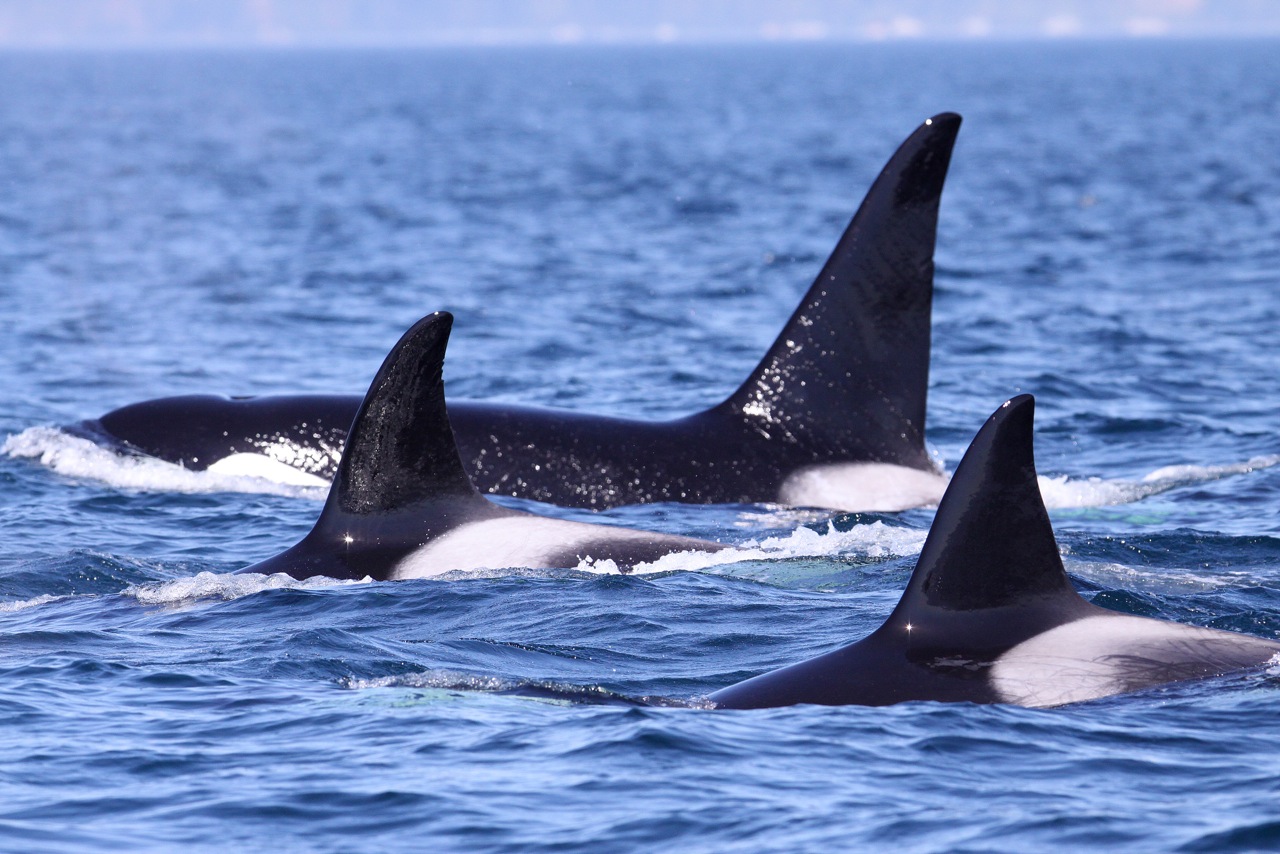
(bove) California transient killer whales CA173, CA166/U033, and CA172 off Race Rocks, BC. Photo: Capt. Mark Malleson, , Victoria, BC.
The past year has seen an historic boom in sightings of marine mammal-eating transient orcas in the Salish Sea. But in the last several weeks, it’s gotten downright exotic out there.
Pacific Whale Watch Association (PWWA) crews are reporting unprecedented sightings of “the exotics,” mysterious transient killer whales rarely seen in these waters. The orcas are part of an outer coastal community that typically spends most of its time along the shelf break between southern California and southeast Alaska. Researchers in Monterrey Bay have assigned the individuals alpha-numerics beginning in “CA,” as in CA166, CA172 and CA173, while the Cetacean Research Program of the Department of Fisheries and Oceans (DFO) Canada at the Pacific Biological Station in Nanaimo, BC have given them designations that begin with “U,” as in “unknown.”
“These orcas really are fairly unknown, but all that’s changing fast,” explains Michael Harris, Executive Director of the PWWA, which represents 32 operators in Washington and BC. “Every one of these encounters with the exotics helps us understand more about them and unravel some of that mystery. They spend so much of their lives out to sea and out of sight of people, but then they come in like this into the Sound and Straits, right into the most intensively studied area for marine mammals in the world. The photographs our crews and researchers have been capturing the last couple of months have advanced our knowledge of these creatures exponentially. The data we’re collecting is invaluable.”
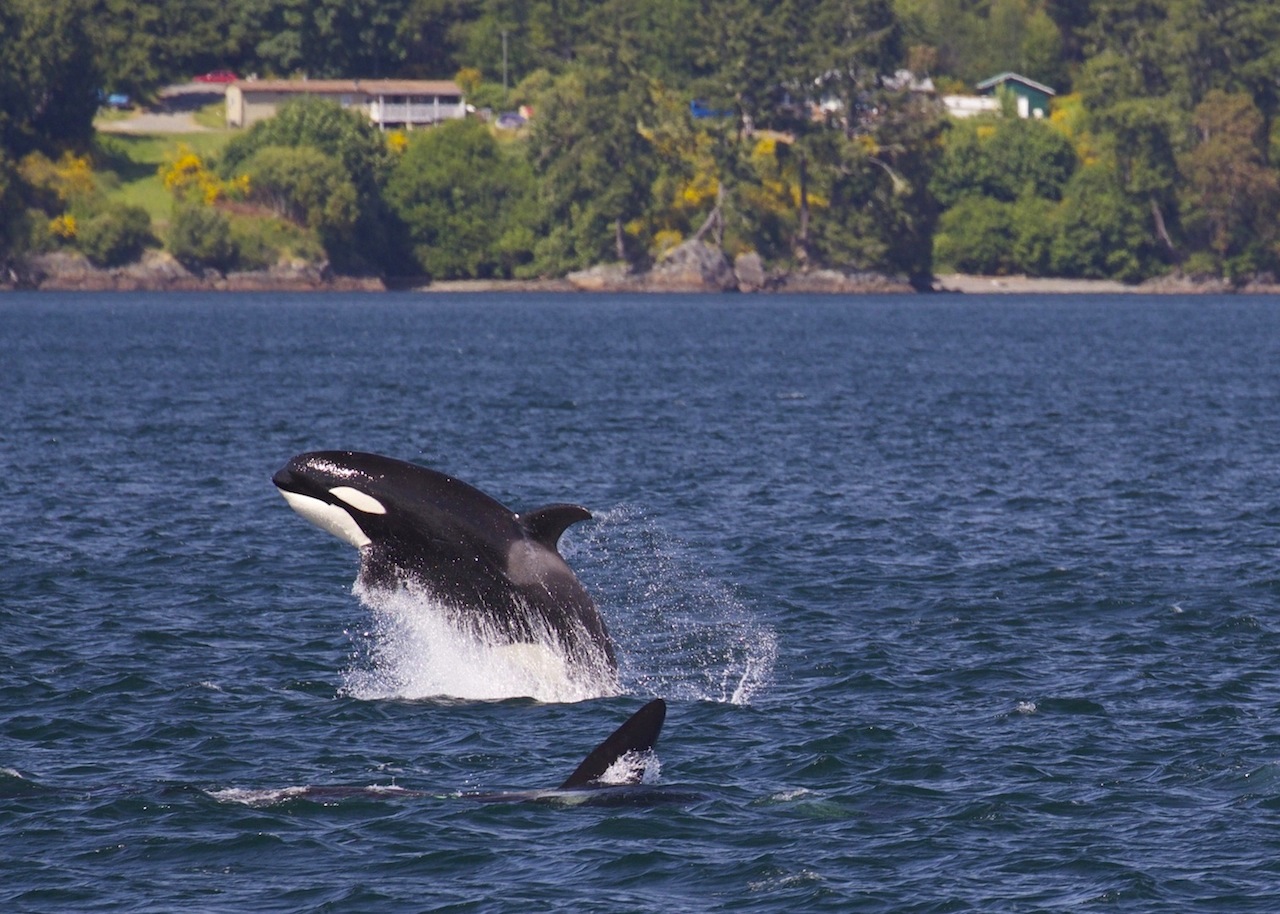
(above) A California transient breaches near Race Rocks, BC on September 15th, 2014. Photo: Andrew Lees, , Victoria, BC.
Veteran Capt. Mark Malleson of is one of the few skippers here who tracks killer whales throughout the winter months, both running tours year-round for Prince of Whales out of Victoria but also as a research assistant for Fisheries and Oceans Canada and The Center for Whale Research.
“This fall we’ve had a record number of encounters with the CAs,” explains Capt. Malleson. “I’ve documented them five times since September 15th sometimes in the same area as inner-coastal transients, what we now call Bigg’s killer whales. Although they’re genetically tied to each other, their behavior is quite different. It’s always exciting to come across killer whales, but these animals are much more illusive making them more interesting.”
The exotics can be IDed visually by their robust size and a solid saddle patch behind the dorsal, compared to the open saddle patch of a Southern Resident. According to NOAA Fisheries, there are approximately100 individual California transients, and unlike residents, they usually travel in groups of 10 or less, often hunting gray whales migrating between Alaska and Mexico. They’re also stealthy hunters, going into “radio silence” before attacking, and then only after a successful hunt burst into loud vocal calls and whistles. Southern Residents don’t go silent before hunting their prey – probably because fish don’t detect their vocalizations. Seals and sea lions, however, do know the difference between the ecotypes and are known to ignore vocalizations of fish-eating residents but react strongly to those of transients.
“It’s a fascinating science and I’m thrilled to be contributing to it,” continues Malleson. “On the one hand, we have the best-known marine mammals in the world, our endangered Southern Residents, and then we get these rare visits by the Exotics, these outer-coastal transient killer whales, which we know so little about in comparison. The more we get to understand these apex predators the more we can help our entire ecosystem”
HOW TO HELP: For all those who want to help the whales, become a Member of The Center for Whale Research! The Pacific Whale Watch Association is proud to be a longtime supporter of Ken Balcomb and his team. Help them help the whales.
##
FOR IMMEDIATE RELEASE
Contact: Michael Harris, Executive Director, Pacific Whale Watch Association /
September 30, 2014
“THE RIGHT PROJECT, IN THE WRONG PLACE…”
Snohomish PUD Announces Abandonment of Pilot Tidal Turbine Project in Admiralty Inlet in Face of Opposition by Whale Watchers, Tribes, Orca Conservancy, OrcaLab and Others
These four-story-tall tidal turbines (left) slated for Admiralty Inlet would’ve generated up to 180dBs at peak operation. The pain threshold for orcas is thought to be 135dBs. No protection devices were designed to protect wildlife from the blades.
The Snohomish County Public Utility District (SnoPUD) has pulled the plug on a pilot tidal energy project slated for Puget Sound’s Admiralty Inlet.
The announcement came on news that the U.S. Department of Energy (DOE) has decided not to fund 50 percent of the project as originally planned. SnoPUD announced Tuesday that it can’t move forward without those federal dollars.
Most, however, point to a growing wave of opposition by Washington tribes, whale watch operators and conservation groups to the siting of these four massive, perilously exposed and extremely loud turbines in sensitive wildlife habitat as the reason the DOE pulled the funding.
“It’s pretty clear that with the opposition to this Admiralty site, especially from the tribes, the feds decided that these guys had to go back to the drawing board on this,” explains Michael Harris, Executive Director of the Pacific Whale Watch Association, which represents 33 operators in Washington and British Columbia, taking over 500,000 passengers out each year from 18 different ports. “When green people look at a green energy project and see red, that means it’s time to take a step back. They really need to rethink this. After years of planning, I can’t understand how no one said, ‘Hey, what can we do to protect wildlife?’”
The Snohomish PUD, by its own admission, hoped to place these turbines squarely in the path of orcas and 12 other federally protected species listed under the ESA. Other possible sites were explored, but the Admiralty Inlet location was chosen primarily to save money in installing, maintaining and, in the event of approaching whales, manually braking the turbines to avoid injuries.
The PUD estimates the time between a report of incoming wildlife and a diver-initiated shutdown of the blades at approximately five hours. Orcas are the fastest marine mammals on the planet, capable of speeds of about 35 miles per hour.
The turbines not only pose a threat to any creature coming into contact with them, they’re also dangerously loud. SnoPUD admits that the blades would’ve produced noise source levels up to 180dBs, and that “research has shown that killer whales react strongly to a received level of 135dBs – the pain threshold.”
“We’re all doing our part to reduce our footprint out there, and make the Sound and Straits a safer, quieter place for wildlife, especially whales,” continued Harris. “No one loves green energy more than whale watchers. This is the right project, just in the wrong place. Let’s find a better spot for these turbines, make some modifications to make them safer, and then pass the hat back to the DOE. I’m sure we’ll get it back on track.”
In voicing its opposition, the Pacific Whale Watch Association joined a coalition of groups led by the BC-based OrcaLab and the Seattle-based non-profit Orca Conservancy, a petitioner and ultimately successful litigant in the historic U.S. District Court that resulted in the first-ever federal protection of Puget Sound’s Southern Resident Community of orcas under the Endangered Species Act (2005), and the treaty tribes of Washington State, led by the Tulalip, Suquamish and K’lallam Tribes.
They also went against the tide, so to speak, in raising concerns about what on the surface – or more accurately, beneath the surface – looked like benign, sustainable energy generation. Many advocacy groups decided not to make waves.
“Green energy projects often go unchallenged by environmentalists,” explained Orca Conservancy’s Shari Tarantino. “Our group is fully supportive of finding alternatives to fossil fuel. We just don’t know enough about these experimental turbines. It’s still unclear what the affects might be on wildlife. We’re down to 79 Southern Resident orcas. That’s too big a gamble.”
HOW TO HELP: For all those who want to help the whales, become a Member of The Center for Whale Research! The Pacific Whale Watch Association is proud to be a longtime supporter of Ken Balcomb and his team. Help them help the whales.
##
FOR IMMEDIATE RELEASE
Contact: Michael Harris, Executive Director, Pacific Whale Watch Association /
September 26, 2014
A pod of approximately 150 of Pacific white-sided dolphins, or “lags,” off the Victoria, BC waterfront on Wednesday. (Photo by Capt. James Mead Maya, Maya’s Westside Whale Charters, Snug Harbor, WA)
“Lags aren’t endangered like our Southern Resident orcas, they’re actually doing OK, but for whatever reason they weren't seen much in the Sound and Straits for decades. I’ve been making wildlife films and doing conservation work here for over 30 years now and I never used to see these dolphins this far south. But lately it’s been crazy with lags. And when these guys turn up, they really put on a show. The entire ocean seems to explode with life.”
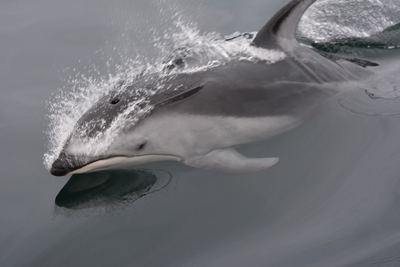
##
FOR IMMEDIATE RELEASE
Contact: Michael Harris, Executive Director, Pacific Whale Watch Association /
September 6, 2014
Endangered Southern Resident Orcas Have First Birth Since 2012, Pacific Whale Watch Association Crew Snaps the First Baby Photo
(Left) Newborn Southern Resident orca L120 with its family off South Beach, San Juan Island. Photo: Capt. Jim Maya, Maya’s Westside Whale Charters.
The Center for Whale Research has confirmed that the endangered Southern Resident Community of orcas of the Salish Sea have had their first birth since 2012. The proud mother is 23-year-old L86, and this is her second calf. The newborn has been designated L120.
The birth is sorely needed in the Southern Resident population. Their numbers had just dipped to 78, the lowest count in over a decade. Meanwhile, the Northern Resident Community of British Columbia have steadily increased in numbers, and transient or marine mammal-eating orcas seem to be thriving in the Sound and Straits. Yet the Southerns continue to struggle to recover. Researchers attribute the problem to lack of prey, primarily their preferred diet of wild Chinook salmon. While the population is hardly out of the woods, any new baby is worth celebrating.
A Pacific Whale Watch Association crew was the first to snap and post the baby photos.
“We wouldn’t have known about it, but heard from David Elifritt out on the water that L86 had a new calf, and then ran into them,” explained Capt. Jim Maya of Maya’s Westside Whale Charters on San Juan Island. “What a thrill to be there at the right time in the right place. Everyone on board was so excited. I’ve never seen a calf born, but it’s always a thrill to be there the day a new calf was discovered.”
“I remember someone saw a shot of L86 breaching back in June and word got out that she had a little ‘baby bump,’” explains Michael Harris, Executive Director of the PWWA. “This is great news. But every time a baby’s born, we’re careful not to pass out the cigars too soon. Infant mortality is really high among wild orcas, especially these Southern Residents. This little whale has a tough road ahead. Every birth is exciting, but we’ll be especially thrilled and relieved to see L120 rolling back into the Sound and Straits next summer.”
HOW TO HELP: For all those who want to help the whales, become a Member of The Center for Whale Research! The Pacific Whale Watch Association is proud to be a longtime supporter of Ken Balcomb and his team. Help them help the whales.
##
FOR IMMEDIATE RELEASE
Contact: Michael Harris, Executive Director, Pacific Whale Watch Association /
August 28, 2014
Spectacular New Photos Available to Media
While the fish-eating Southern Resident orcas of the Salish Sea continue to struggle to recover, the marine mammal-eating transient orcas – also known as Bigg’s orcas – seem to be thriving here. Never in recorded history has there been more sightings of transient orcas in the Sound and Strait. Pacific Whale Watch Association (PWWA) crews have been reporting nearly daily encounters with “the Ts,” as they’re affectionately known. And some of the behavior they’re seeing is straight out of National Geographic.
“If anyone was wondering why they’re called ‘killer whales,’ here’s your answer,” explains Michael Harris, Executive Director of the PWWA, which represents 33 operators in Washington and British Columbia, taking over 500,000 passengers out each year from 17 different ports. “The hunting activity we’re seeing from these whales out on the water lately has just been beyond words. They’re certainly not shy about chasing down and plucking a harbor seal or porpoise right in front of our boats. They’re cooperatively hunting, using techniques that are amazingly creative and advanced, and leaving even the most experienced of our operators in awe. They’re giving us a front-row seat to one of the most spectacular shows in nature. As my six-year-old said after watching a group of Ts take a sea lion, it’s been ‘double-cool.’”
According to PWWA, in the 76 calendar days between June 1st and August 15th of this year, transient orcas have been sighted on at least 49 days. Since the beginning of the year, crews have reported seeing at least 110 different individual transients, most commonly a group known by researchers as the T65As, whose newest calf was first seen by a PWWA crew in late March. Other frequent visitors have been the T34s, the T36As, the T37s, the T124s, the T101s and the T137s.
“We see them so often now that some of our captains and naturalists have started calling them the ‘resident transients,’” continued Michael Harris. “Back in the day, a T sighting was pretty rare. Now they seem to be showing up almost daily. Just last Sunday I was just coming back from an awesome day with the T65As and T36As and there was J-Pod, one of our resident pods, coming up along the westside of San Juan Island. We’re even seeing Ts and rezzies (residents) in the same area now. It’s all about the food. When we have salmon, we have Southern Residents. And when we have an abundance of marine mammals and other prey for the transients, we get transients. Let’s hope it continues.”
Longtime naturalist and orca researcher Jeanne Hyde of Maya’s Westside Whale Charters points out, however, that just because we’re seeing the same transient orcas in the area doesn’t mean they’re taking up residence. After tracking these mysterious and stealthy hunters and documenting more than 200 individuals over the last seven years, Hyde says that historically the transients will use an area for a few years and then move on. And they are far less community-oriented as our famous Southern Resident orcas, moving around from one group to another, sometimes disappearing for years from a natal group. And unlike the residents, transient orcas don’t stay with their mothers all their lives. In other words, according to experts like Hyde, transients are still transients.
"We have had a fantastic summer with the Bigg's orcas,” said Naturalist/Capt. Michael Colahan of Island Adventures Whale Watching of Everett, Anacortes and Port Angeles, who keeps one of the most detailed sightings reports among the Association. “We’ve even had what we call ‘superpods,’ multiple pods in one area. We’ve consistently had encounters with the T34s, T36As, T37s, T65As, T101s and T124s all traveling together, exceptionally surface active, with incredible foraging and social behavior. It’s been a thrill, and it never gets old, even for those of us who see orcas every day."
And they’re not just taking marine mammals. While driving for Legacy Charters of Friday Harbor a little before sunset on August 22nd, Capt. David Howitt and naturalist Heather MacIntyre were watching the T65As and T36As hunting together off Pender Island, BC. One group was holding a harbor seal under the water.
“And then, off on the other side of our boat, we noticed a burst of surface activity and a small seabird, a marbled murrelet, fluttering near the surface in a panic mode, possibly already been injured,” recalled Capt. Howitt. “We were all still focused on the seal hunt on the other side of the boat, but I also knew that transients sometimes prey on diving birds like the rhinoceros auklet and common murre, because they’re so high in fish oil. So I started watching this little murrelet with some interest. And then in a flash, an orca burst through the surface, its body lunging clear with a twist and flip upside down, snatching that little bird from the air. What struck me was the sheer commitment, the unwavering intent carried to completion, and just the immense power – all for a small seabird.”
The Ts also don’t care much about the size of their prey. Capt. Andrew Lees of Five Star Whale Watching out of Victoria, BC reported a group recently going after four Steller sea lions, which can top 10 feet and 2,500 pounds and have some of the most powerful jaws in the ocean. The sea lions managed to escape that day, but Lees caught up to the T49s killing a Steller in spectacular fashion near Race Rocks, BC.
In the animal kingdom, almost nothing – except for humans – seems to be off the transient menu. In May of 2012 a deer carcass was discovered near Telegraph Cove, BC that was thought to be the remains of an orca kill – deer often swim from island to island, and apparently this one was in the wrong place at the wrong time. Ts have also been known to take river and sea otters. In 1993 in southeast Alaska two fishermen observed a group of three or four killer whales attack and kill one of a pair of moose that were swimming across a channel. One moose managed to escape the attack but later became entangled in kelp and drowned. Terrestrial mammal kills by orcas have been documented since 1961. But again, around people, these killers can sometimes appear almost cuddly.
Just three days ago, Capt. Hobbes Buchanan of San Juan Island Whale & Wildlife Tours reported being “hugged” by a T63, a large male transient also known as “Chainsaw” for its distinctive jagged dorsal fin. PWWA crews say the transient orcas, especially after they’ve had a good meal, often dispense of their stealthy, business-like demeanor and become downright chatty, highly social, and seemingly remarkably curious of whale watchers, often breaching and spyhopping, getting better looks at the boats looking at them.
It makes for spectacular whale watching, but PWWA crews continue to be extremely cautious when operating around these extraordinary creatures, giving them the same space afforded the endangered Southern Resident orcas. The “Best Practices” guidelines that the Association created for the protected Southerns and are now federal law are still strictly adhered to with these unlisted transient orcas. The best science comes from careful observation.
“And the data our crews out there are compiling is really groundbreaking,” continued Harris. “It’s exciting to be able to contribute to such an emerging science like the study of transient orcas. (Pioneering orca researcher) Mike Bigg would’ve been proud that we’re naming these whales after him. But I know that Mike would’ve been one of the first to say that we shouldn’t be lumping all of these non-resident orcas into one big species – what we’re learning is that these Ts are probably several different species, and every one is distinctive. And the only way we’re going to pinpoint that science is to keep watching them, keep documenting these sightings as we’ve been doing, and keep learning about them. The more we know, the better we can protect.”
Special thanks to Jane Cogan for her work with PWWA on sightings data.
HOW TO HELP: For all those who want to help the whales, become a Member of The Center for Whale Research! The Pacific Whale Watch Association is proud to be a longtime supporter of Ken Balcomb and his team. Help them help the whales.
##
FOR IMMEDIATE RELEASE
Contact: Matt Plier, Island Adventures Whale Watching
/
August 14, 2014
NEW WHALE WATCH BUSINESS SURFACES IN PORT ANGELES!
Island Adventures Whale Watching Launches in Clallam County on August 23th
PORT ANGELES DEPARTURE LOCATION
Researchers call it “the humpback comeback,” the dramatic re-emergence of humpback whales recently to the Pacific Northwest after being extirpated by commercial hunting here a generation ago. They’ve been provided spectacular shows for whale watchers, breaching and taillobbing, even coming right up to boats and “mugging” them. The Salish Sea is beginning to look like the waters off Hawai’i.
On the U.S. side, Port Angeles is by the far the best departure location to watch humpbacks – and now whale watchers have an easy option to do that. Island Adventures Whale Watching has just invested one million dollars in a new Port Angeles program, and is proud to be the only tour vessel running from Clallam County. Port Angeles is already a destination for 3.14 million visitors annually – Island Adventures plans to provide another amazing activity to these guests.
GUARANTEED WHALE WATCHING TOURS
Island Adventures guarantees that passengers will see orcas, minke whales, gray whales or humpback whales – a guarantee that has been in effect since 2000. This guarantee, the phenomenal tours, and dedicated staff is the reason why Island Adventures has been voted number one for five consecutive years by KING 5’s Evening Magazine and holds a five-star TripAdvisor rating.
WHALES AND WILDLIFE
Island Adventures’ industry-leading success rating will translate to the Port Angeles program effortlessly. With the waters thick with humpback whales often less than 10 miles away, the Port Angeles tour will be one of the best in the Northwest. On an average tour, one can expect to see lots of humpbacks, sea lions, elephant seals, sea otters, and of course orcas and minke whales.
AUGUST 23 THROUGH NOVEMBER
Daily tours will depart at 11am out of Port Angeles. With the addition of Port Angeles as a departure location, Island Adventures is now able to extend the whale watching season deep into the fall. This increased schedule now means that Island Adventures runs whale watching tours in the Salish Sea from the beginning of March through the end of November – longer than most companies.
ISLAND ADVENTURES
In the offseason of 2013, Island Adventures purchased the 85-foot excursion vessel Island Explorer 4 solely for the Port Angeles program. All modifications were made to provide the best viewing platform for watching whales on the West Coast.
Experience matters! Since 1996, Island Adventures Whale Watching has provided an industry-leading success rate of 96.6% and has run over 3,000 tours. We are a high-end whale watching tour with fast, safe, and comfortable vessels – all of which have created a need for season pass holders and “frequent floater” programs for repeated guests.
Green matters! Island Adventures is also one of the most environmentally sensitive whale watching companies on the planet. Each of our boats are retrofitted with Fitch Fuel Systems to dramatically reduce exhaust and noise, as well as state-of-the-industry propellers and above-water exhaust to reduce the amount of noise we put in the water. We are proud, longtime members of the Pacific Whale Watch Association and leaders in establishing “Best Practices” guidelines that have become the model for sustainable whale watching around the world.
HOW TO HELP: For all those who want to help the whales, become a Member of The Center for Whale Research! The Pacific Whale Watch Association is proud to be a longtime supporter of Ken Balcomb and his team. Help them help the whales.
##
FOR IMMEDIATE RELEASE
Contact: Michael Harris, Executive Director, Pacific Whale Watch Association /
August 13, 2014
The Southern Resident Community of orcas in the Salish Sea continue to languish at their lowest numbers since they were listed in 2005 under the Endangered Species Act. And yet, Pacific Whale Watch Association (PWWA) crews are reporting the highest frequency of resident orca sightings in decades.
According to PWWA, of the 73 days between June 1st and August 12th of this year, Southern Resident orcas have been sighted 66 days.
“We’ve been watching whales since 1987 and this is by far the best year of resident whale sightings in over 20 years,” reports Capt. Drew Schmidt of San Juan Cruises out of Bellingham. “It must be a great year for fishing with the amount of foraging we’ve seen the Southern Residents doing this year.”
Relatively speaking, it has been good fishing out there. According to the data from the Albion Chinook Test Fishery on British Columbia’s Fraser River, Chinook returns this year are the strongest since 2010 – another boom year for Southern Resident orca sightings. While even these numbers are still far below historical levels, it provides more proof that when prey availability is high, the whales are nigh.
PHOTO: (left) Fish On! Southern Resident L84 with a salmon in its mouth. Photo: Dave Ellifrit, Center for Whale Research.
On the Columbia River, Washington State fisheries officials forecast a return of more than 1.6 million fall Chinook – which would be the largest since record-keeping began in 1938 – and a return of nearly one million coho this summer as well. Chinook are even doing slightly better in Puget Sound, where summer/fall returns are expected to total nearly 283,000 fish, higher than last year. A strong run of coho is also expected back to the Sound, with nearly 873,000 forecast to return to local streams, similar to last year.
But perhaps the best news has been the abundance of sockeye in marine areas around the San Juan Islands and in the Strait of Juan de Fuca, the core Critical Habitat for Southern Residents. Officials predict that about 23 million sockeye salmon are forecast to return to the Fraser River this year, making their way through those marine areas. PWWA crews are reporting a high number of sockeye, with orcas fast in pursuit.
Despite the recent – and relative – good salmon news, Ken Balcomb of the Center for Whale Research cautions against any premature news that wild runs in the Pacific Northwest are on the rebound, particularly for the all-important Chinook. Or that the Southern Residents are anywhere close to recovering. A few good fish stories does not mean the orcas are out of the woods.
“Recovery of this population will take years and cannot happen unless there is widespread Chinook salmon recovery that is sustained, not just episodic good news stories about some stocks of salmon,” Balcomb says. “The whales are foraging, but not all of them are making it in to the Salish Sea core area. We have seen a bizarre arrangement of matrilines and individuals this summer, and a huge spread of them over the Critical Habitat from the Pacific Ocean to the Fraser River entrance. We hope that they are feeding sufficiently and that there’ll be successful birthing this autumn, but it’s disappointing that there’s been no successful births this year or last.”
Any uptick in salmon abundance could also change in an instant. On the morning of August 4th, a tailings dam at a central British Columbia mine site breached, sending an estimated 14.5 million cubic meters of mine waste – 3,828,000,000 gallons – into the Fraser River watershed, threatening both sockeye and Chinook. The Southern Resident orcas rely heavily on salmon produced on the Fraser.
The Center for Whale Research and PWWA crews also point out that the Southern Resident orcas, now numbering 80 whales, are showing up fewer and farther between than in the past.
“It’s important to note that while our crews are reporting lots of ‘whale days,’ we’re not seeing lots of whales,” explains Michael Harris, Executive Director of the Pacific Whale Watch Association. “Southern Residents aren’t showing up in anything close to a quorum – of the 66 days they were sighted here, we had 21 days with 20 or fewer whales, and 29 days with fewer than 30 whales. There was only one day in June when we had more than 45 whales present. The days of the ‘superpod,’ when nearly every member of the three pods are in the same area, greeting each other and putting on this amazing orca ceremony, just isn’t happening anymore.”
But as the population continues to struggle, researchers and whale watchers say that seeing even some of the whales out there almost daily, and knowing that at least for now they seem to be feeding well, may provide some hope that we can restore their numbers. And the first order of business is salmon recovery.
“The Southern Residents could be the most resilient marine mammal population in the world,” Harris continues. “We call them the ‘Urban Orcas,’ the only resident orcas in the lower 48 United States, the only population that has to make a living among millions of humans and the changes we’ve wrought on this habitat. Bringing them back from the brink of extinction is no small task. But seeing them thrive out there this summer, even with their numbers precariously low, and knowing that this correlates with a sea full of fish, the most salmon we’ve had in years, it gives us a lot of hope.
“Orca recovery shouldn’t be such a mystery,” Harris continued. “We’ve got to quit fiddling while Rome burns. Go with what we know. Salmon is the key to saving the Southern Residents.”
HOW TO HELP: For all those who want to help the whales, become a Member of The Center for Whale Research! The Pacific Whale Watch Association is proud to be a longtime supporter of Ken Balcomb and his team. Help them help the whales.
##
FOR IMMEDIATE RELEASE
Contact: Michael Harris, Executive Director, Pacific Whale Watch Association /
Andrew Lees, Five Star Whale Watching /
June 24, 2014
ANOTHER RESCUE BY WHALE WATCH BOAT IN BC
Pacific Whale Watch Association Crew Rescues Kayaker From Frigid Water, Suffering from Hypothermia
A Pacific Whale Watch Association crew was involved in yet another dramatic rescue in the waters off Vancouver Island.
At about 10:20 on Monday morning the Supercat from Five Star Whale Watching out of Victoria, BC came upon a man who had fallen out of his kayak south of Trial Island. He had been in the water for about 15 minutes.
”We were able to get the gentleman out of that frigid water quickly and into our boat,” explained Andrew Lees of Five Star Whale Watching. “We immediately wrapped him in a thick jacket and gave him a warm drink, but it was obvious that the first sign of hypothermia had started to set in.”
The Supercat (left) then took the kayaker to the Oak Bay Marina where the crew were met by members of the Oak Bay Fire Department. The man is reported to be doing well.
“This is a good reminder that people are not whales,” continued Lees. “When people fall into this water they get cold pretty fast and can die. It was extremely lucky we were passing the scene at that time, and that our highly trained crew acted so fast to get him out of the water and to shore to the emergency services.”
The waters around Trial Island are particularly treacherous, Lees noted, especially for inexperienced kayakers. “With all the wildlife and spectacular scenery to look at, sometimes people forget to look after themselves out there,” said Michael Harris, Executive Director of the Pacific Whale Watch Association. “And that’s why we really emphasize emergency response training among our operators. Even a few minutes can mean the difference between life and death. This guy was really fortunate that whale watch boats were out there.”
This is the second dramatic rescue by a whale watch crew this month. Two weeks ago, a PWWA boat saved a couple and a dog from a 53-foot pleasure boat engulfed in flames near Galiano Island, BC. In June of last year, Pacific Whale Watch Association boats were involved in two rescues. A crew from Maya’s Westside Whale Charters plucked two kayakers from the frigid waters of Haro Strait, one of them suffering from hypothermia. They probably saved his life. Two days later, a boat operated by BC-based Prince of Whales Whale Watching rescued a family from a burning boat in the Strait of Georgia.
HOW TO HELP: For all those who want to help the whales, become a Member of The Center for Whale Research! The Pacific Whale Watch Association is proud to be a longtime supporter of Ken Balcomb and his team. Help them help the whales. ##
FOR IMMEDIATE RELEASE
Contact: Michael Harris, Executive Director, Pacific Whale Watch Association /
Ian Gidney, Outdoor Visions / June 13, 2014
DRAMATIC RESCUE BY WHALE WATCH BOAT
Pacific Whale Watch Association Crew Rescue Two People, Dog From Burning Vessel in British Columbia
New details are emerging on a dramatic rescue Wednesday in the Strait of Georgia involving a Pacific Whale Watch Association boat.
Capt. Ian Gidney of the Salt Spring Island-based Outdoor Visions and passengers had just left a subgroup of J-Pod orcas and were heading home via Active Pass when a mayday call came in. They sped toward a large column of black smoke and arrived at the scene within eight minutes to find a 52-foot pleasure boat in flames.
“We saw a man in a dinghy and a woman and dog on deck,” explained Capt. Gidney. “The boat was completely engulfed in flames and smoke. It was very scary.” The woman then dropped the dog into the dinghy and climbed in after.
“They had no engine, so we grabbed their dinghy and managed to pull them away from the fire,” Gidney continued. “The woman and dog got onto another boat that had just arrived on the scene, and we took the man onto our boat and assisting him as best we can. He said his engine would not turn off and when he went to the engine room it was full of smoke. Thankfully he sent a mayday call right away. He was pretty shaken and had inhaled smoke, but otherwise was alright. It could’ve been a lot worse.”
Soon the RCMP, a hovercraft from Vancouver Airport and the Canadian Coast Guard arrived at the burning boat, and took the rescued couple – and their dog – back to a medical clinic on Galiano Island. No one suffered serious injuries. The vessel was still in flames when Outdoor Visions left the scene.
“Late spring and early summer always seems to bring a spike in marine incidents, so our crews are always standing by to assist, especially this time of year” said Michael Harris, Executive Director of the Pacific Whale Watch Association. “All Pacific Whale Watch Association crews regularly do emergency response training. You just never know what’s going to happen out there.”
In June of last year, Pacific Whale Watch Association boats were involved in two dramatic rescues. A crew from Maya’s Westside Whale Charters plucked two kayakers from the frigid waters of Haro Strait, one of them suffering from hypothermia. They probably saved his life. Two days later, a boat operated by BC-based Prince of Whales Whale Watching rescued a family from a burning boat in the Strait of Georgia.
“We always say that we’re not just watching whales out there,” Harris continued, “we’re watching out for everyone.”
HOW TO HELP: For all those who want to help the whales, become a Member of The Center for Whale Research! The Pacific Whale Watch Association is proud to be a longtime supporter of Ken Balcomb and his team. Help them help the whales. ##
FOR IMMEDIATE RELEASE
Contacts: Jennifer Dixon, Prince of Whales Whale Watching / Madelaine Hatch, Granville Communications / Michael Harris, Executive Director, Pacific Whale Watch Association /
May 18, 2014
ERICH HOYT COMING TO VANCOUVER
Noted Wildlife Author and Marine Conservationist Comes to Orca Country to Speak at Vancouver Public Library
Renowned author and marine conservationist Erich Hoyt is the featured speaker at Vancouver Public Library on Tuesday, May 20, announced the Georgia Strait Alliance. Admission is free.
Erich Hoyt is the author of 19 books, including Orca: The Whale Called Killer and Marine Protected Areas for Whales, Dolphins and Porpoises, will speak on “Adventures with Orcas in the North Pacific – From A1 Stubbs to Iceberg, the White Russian Bull.” He is a Research Fellow with Whale and Dolphin Conservation (WDC) in the United Kingdom and is co-founder of the Far East Russia Orca Project, which has recorded the Russian killer whale pods and photo-identified some 1,500 orcas off Kamchatka and in the Commander Islands – including three white orcas found so far in the study areas.
“We are living in an era and in a part of the world where whale research has exploded,” says Erich Hoyt. “And we’ve got some amazing orca stories to tell here—mostly positive, some heartbreaking, but all compelling.”
Orca Tour 2014 is presented in Vancouver by the Georgia Strait Alliance, the Vancouver Public Library and The Whale Trail, and sponsored by Prince of Whales Whale Watching. The tour’s goal is to promote awareness of the Southern Resident killer whales throughout their range, along the Pacific Coast from Vancouver Island to Monterey, California, and to inspire stewardship of the marine environment. Vancouver is the last stop on the Orca Tour.
“Erich Hoyt’s research highlights the need to protect orca habitat around the world, including our endangered southern orcas right here in Georgia Strait”, said Christianne Wilhelmson, Executive Director, Georgia Strait Alliance. “With recent news that the government’s action plan for protecting these amazing creatures is mostly more inaction, our work is far from done to ensure orcas are part of our world for generations to come.”
"We are pleased to present a speaker of Erich Hoyt's calibre at the Vancouver Public Library," says Daniela Esparo, VPL's manager of programming and learning. "VPL offers a variety of free programs and events at all branches, and public interest in dynamic programs such as this is growing."
“Prince of Whales is thrilled to help make this talk by Erich Hoyt happen,” explained Alan McGillivray of Prince of Whales Whale Watching. “Erich is of course a legend in marine conservation and a powerful and prolific author, but he’s also an eloquent spokesperson for the importance of sustainable ecotourism and wildlife viewing in building these constituencies for conservation.”
The talk is Tuesday, May 20, 7:00 pm. Vancouver Public Library, 350 West Georgia Street, Alice MacKay Room, Lower Level Doors open at 6:30 pm. Space is limited. Seating is first come, first served. Mr. Hoyt will sell and sign his books immediately following his talk. Georgia Strait Alliance – Formed in 1990,
Georgia Strait Alliance is the only conservation group working to protect and restore the marine environment and promote the sustainability of Georgia Strait, its adjoining waters and communities, the place where 75% of British Columbians live, work and play.
Prince of Whales Whale Watching -
Pacific Whale Watch Association www.pacificwhalewatchassociation.org
##
FOR IMMEDIATE RELEASE
Contact: Michael Harris,
Executive Director, Pacific Whale Watch Association
May 10, 2014
The world’s oldest known orca is another year older.
J2, also known as “Granny,” estimated by The Center for Whale Research to be 103 years old, was sighted yesterday by Pacific Whale Watch Association crews.
The matriarch of the Southern Resident Community is believed to have been with her pod just eight days ago off the coast of California near the mouth of the Russian River.
“And then yesterday we see her cruising through Boundary Pass on her way to Bellingham. That’s a distance of about 800 miles covered in a little over a week,” explained Michael Harris, Executive Director of the Pacific Whale Watch Association. “Not bad for a great-grandmother. This is wonderful news – just in time for Mother’s Day.”
(photo) Centenarian Cetacea… J2, or “Granny,” is thought by researchers to be 103 years old. Photo by Andrew Lees of Five Star Whale Watching, Victoria, BC.
“We were lucky enough to encounter all 25 members of J-Pod in the southern Strait of Georgia, with Granny and Onyx leading the way,” said Capt. Simon Pidcock of Ocean EcoVentures out of Cowichan Bay, BC. “We were thrilled to see her. And it’s mind-blowing to think that this whale is over 100 years old. She was born before the Titanic went down. Can you imagine the things she’s seen in her lifetime?”
The average lifespan of a wild orca is between 60 and 80 years, and yet the Southern Residents – despite being listed under the U.S. Endangered Species Act – have some extraordinary longevity stories, including the female K7, or Lummi, who died in 2008 at the age of 98. Another Southern Resident female, L25, or Ocean Sun, is thought to be 85 years old.
The Southern Resident orca Tokitae, or Lolita, now in Miami Seaquarium, and the Northern Resident orca Corky in SeaWorld San Diego – both about 50 – are the oldest killer whales in captivity. They are the last surviving orcas captured from the region for marine parks.
“These Pacific Northwest orcas certainly have great genes,” continued Harris. “I’m sure the pressures we put on them have made them resilient. They’re problem solvers, survivors. We’ve taken away their food and trashed their homes. We’ve done all sorts of awful things to them, and yet here they are – and here’s Granny, still out front, still running the family. It gives us hope that we can still turn this ship around and save them from this extinction slide. It shows that if we give these whales a little help, they’ll do a lot with it.”
The confirmation of Granny is very special to Ken Balcomb, who’s seen her now for 37 consecutive years.
“It’s always great when we see that distinctive dorsal fin and know that J2 is back,” said Balcomb. “She and the rest of the pod were really trucking to get here from California. On the one hand, it’s good news that Granny’s in such great shape and can make that trip. On the other hand, it also shows that these orcas have to travel pretty far to find fish. Ideally, we’d have plenty of salmon here and J-Pod wouldn’t have to go 800 miles for a food run.”
HOW TO HELP: For all those who want to help the whales, become a Member of The Center for Whale Research! The Pacific Whale Watch Association is proud to be a longtime supporter of Ken Balcomb and his team. Help them help the whales. www.whaleresearch.com
##
FOR IMMEDIATE RELEASE
Contact: Michael Harris,
Executive Director, Pacific Whale Watch Association
May 5, 2014
“WE’VE NEVER SEEN ANYTHING LIKE THIS…”
Minke (pronounced meen-key) whales are not an uncommon sight in the Sound and Straits, but last weekend Pacific Whale Watch Association crews came across something even the oldest of old-timers say they’ve never seen before – a mother minke with a newborn calf. The whales were spotted Saturday afternoon around Hein Bank, a feeding hotspot about five miles southwest of San Juan Island.
(photo) Newborn minke whale (left) with mother off Hein Bank, Washington. Photo taken Saturday, May 3rd by Island Adventures Naturalist and Captain Brooke McKinley.
“I’ve been working these waters for over three decades now, and I talked to Ron Bates of Five Star Whale Watching and other researchers and skippers who have been here just as long or longer, and we’ve never seen anything like this,” explained Shane Aggergaard of Island Adventures Whale Watching. “We do see minkes a lot, especially this time of year, and we’ve seen juveniles traveling with their mothers, but never a newborn.”
Island Adventures Captain and Naturalist Brooke McKinley aboard the Island Adventurer 4 was able to capture remarkable photos of the minke mother and baby, which are now being reviewed by scientists at both The Center for Whale Research and Cascadia Research Collective.
“We’ve been keeping tabs on whales for almost 40 years and we’ve never seen a minke this young out there. It’s an extremely interesting sighting,” said Ken Balcomb of The Center for Whale Research on San Juan Island. “Let’s hope it means that the population is growing.”
“Thanks to people like Ken Balcomb we know more about our resident killer whales here than any marine mammal population in the world,” explained Michael Harris, Executive Director of Pacific Whale Watch Association. “And yet we know very little about a species that also makes its home out here, the minke. It’s probably our most mysterious whale, and now we’ve just been given a rare glimpse of a newborn. The scientists we gave these photos to are kids in a candy store. This is a very special occurrence, and having these amazing images to review may provide a lot of clues to researchers.
“The more we learn about these minke whales, the better equipped we are to protect every creature out there.”
The minke is a member of the rorqual family of whales (whales with baleen, a dorsal fin, and throat pleats) and spends very little time at the surface. It’s one of the fastest whales in the ocean, capable of speeds up to about 25 miles per hour, its blows are rarely visible and it disappears quickly after exhaling, making it difficult to spot – and to study. It’s also one of the smallest of baleen whales, with adults reaching a maximum of just about 33 feet and 10 tons. However, a good look at the minke underwater shows it to be one of the most beautiful of all cetacea, with a slender and streamlined body, dark on top and light-colored at the bottom, with two areas of lighter gra
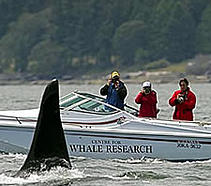 Become a member of The Center for Whale Research! The Pacific Whale Watch Association is proud to be a longtime supporter of Ken Balcomb and his team as they continue their fourth decade surveying the Southern Resident orcas and working to recover the population. Help them help the whales.
 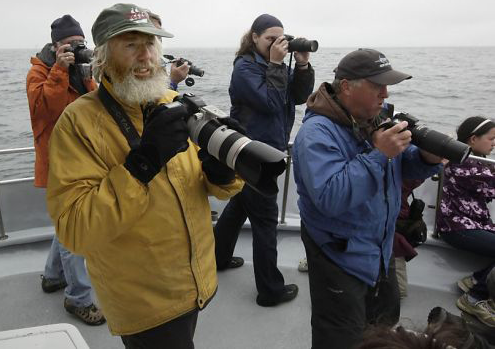 PWWA is also proud to assist the important work of Dr. John Calambokidis and Cascadia Research Collective, a scientific and education organization based in Olympia, Washington studying and protecting threatened marine mammals. For more information about Cascadia, visit