
PWWA Science Advisory Panel
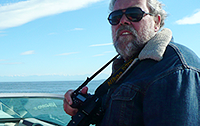
Kenneth C. Balcomb, III
Executive Director/Principal Investigator for The Center for Whale Research, Associate Member of Pacific Whale Watch Association
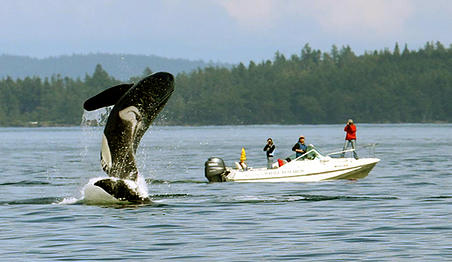 Ken Balcomb obtained his Bachelor's degree in Zoology in 1963 from University of California, Davis and soon after was employed by the United States government as Field Biologist GS5-7, first in eastern Pacific large whale research and later in central Pacific marine bird research. During the Vietnam era, he was a commissioned US Navy pilot and oceanographic specialist. He then did his graduate studies at University of California, Santa Cruz with Dr. Ken Norris, the world famous marine mammal biologist. While a graduate student, Ken conducted humpback whale research in the North Atlantic with colleague Dr. Steve Katona and taught Marine Biology aboard r/v Regina Maris for Dr. George Nichols of ORES and Harvard University. Ken is a pioneer in photo-identification of cetaceans and is the founder of Orca Survey (1976), a study of Pacific Northwest Southern Resident Killer Whales (orcas). He founded the non-profit Center for Whale Research in 1985 and is its volunteer Executive Director, and employed Senior Scientist. Ken is a Charter Member of the Society for Marine Mammalogy. Email:
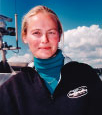
Anna Hall, PhD.
Principal Science Advisor to Pacific Whale Watch Association, Marine Mammal Biologist at AECOM, Captain/Engineer/Naturalist for Prince of Whales Whale Watching
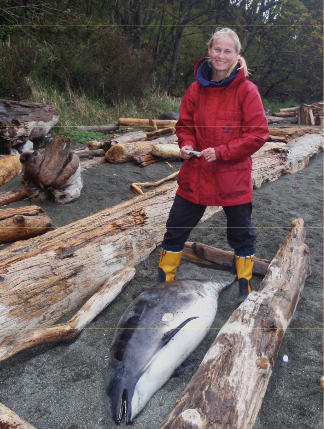 Dr. Anna Hall is one of the top harbour porpoise researchers in the world - and that's a tall order. Harbour porpoises could be the most difficult-to-observe cetaceans in coastal British Columbia waters. Because of their small size and shy nature, they're also one of the most likely to be overlooked. They are considered to be highly sensitive to human activities, and regularly fall prey to their natural predator, transient (Bigg's) killer whales. Throughout their range, including British Columbia, they are also killed in fishing nets. Their elusive nature creates difficulties in studying harbour porpoise, but with some patience, good luck and keen observation, insight is being gained into these remarkable animals lives. Anna Hall has been studying wild harbour porpoises in the waters near Victoria for almost two decades. During this time, she has learned much about their ecology, biology, life history, abundance, distribution and habitat use patterns. Dr. Hall's doctoral thesis focused on the foraging behaviours and reproductive habitat selection of harbour porpoise. This presentation is the culmination of her PhD. research work at the University of British Columbia. Dr. Anna is also Capt. Anna, with some two decades experience operating a wide range of Coast Guard-certified vessels for Prince of Whales Whale Watching. There is perhaps no one in the region better qualified to advise the Pacific Whale Watching Association on sustainable, non-impactful wildlife viewing. We are honored to have her serve as our longtime Principal Science Advisor. Email:
James Cosgrove, MSc.
Retired Professor of Biology and Manager of the Natural History Section at the Royal British Columbia Museum, Captain/Biologist/Trainer of Naturalists for SpringTide Charters Whale Watching
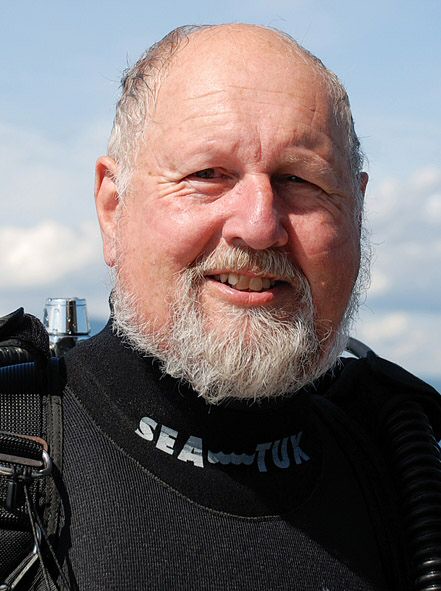
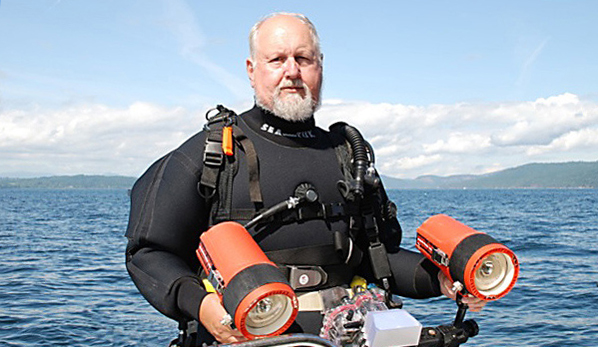 A scuba diver for more than 53 years and a certified diving instructor since 1971, Jim Cosgrove has long been interested in the plants and animals of the ocean. An accomplished underwater photographer and videographer, Jim and his wife owned and operated J&J Divers, (1971–2003), a company devoted to assisting underwater image makers. They have been involved in numerous projects producing documentary television programs, as well as scientific and popular articles about the giant Pacific octopus and other British Columbia marine life. For 30 years Jim served as the Diving Safety Officer at the University of Victoria and is a founding member of the Canadian Association for Underwater Science. After obtaining a Bachelor and Master of Science degree (Marine Biology) Jim worked for 10 years in the Biology Department of a community college before moving, in 1987, to a new position at the Royal British Columbia Museum. Jim retired as the Manager of the Natural History Section at the Royal BC Museum in May, 2007. Since retirement Jim has co-authored a book on the giant Pacific octopus, and now spends his summers as the Biologist/Trainer for SpringTide Charters Whale Watching and his winters travelling to warm water destinations. He lives in Victoria with his wife of 42 years. Email:
Prof. Robert Otis, PhD.
Professor of Psychology and Animal Behavior and Human Development at Ripon College, Principal Investigator of Vessel Impacts to Southern Resident Killer Whales since 1989 at Lime Kiln Lighthouse, San Juan Island, WA
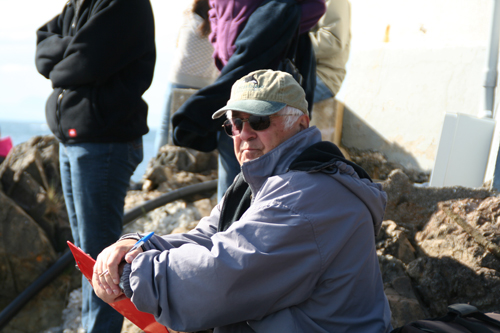 Dr. Bob Otis, now a retired professor from Ripon College, has been collecting killer whale data and studying whale/boat interactions at Lime Kiln Lighthouse on the west side of Washington's San Juan Island for a quarter-century. Every year, from May 20th to August 10th, between the hours of 9am and 5pm, Dr. Otis and his team of interns records data on every group of killer whales that passes within half of a mile of the lighthouse in any direction. While his data of course doesn't fully document every time the whales are in inland waters, it's a valuable long-term data set collected in the heart of the summer range of the Southern Residents, and its consistent collection provides a reliable benchmark. Every day, Dr. Otis and his team take many measurements in the one-mile long and half-mile out stretch of ocean, and every day they carefully catalogue the results. They measure how far the pod is spread from each other, the number of boats in the vicinity, how far offshore the whales are, their vocalizations, and the tide. And they've compiled an extraordinary long-term database on whale behavior in their study area. Dr. Otis has seen “over a thousand tail slaps and hundreds of breaches,” by his count. One thing people rarely realize about his research is the fact that is accessible to anyone who wants to learn about it. People all over the world have requested it and used it in PhD. dissertations and graduate projects. Pacific Whale Watch Association is proud to have assisted Dr. Otis and his team over the years in providing our platforms, as well as our perspectives from the water. In turn, they've provided us invaluable reports on how well we're doing out there. In large part to the observations of the researchers, PWWA voluntarily imposed a quarter-mile no-go zone along the west side of San Juan Island, extending to a half-mile zone at Lime Kiln. And whale watch operators continue to cull the notes of Dr. Otis and other longtime westside researchers to modify current guidelines to better protect the Southern Resident orcas. Email:
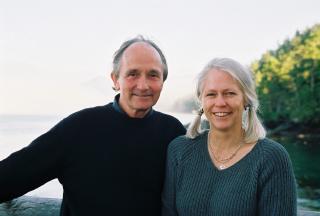 Dr. Paul Spong and Helena Symonds
OrcaLab, Hanson Island and Alert Bay, BC
Dr. Paul Spong and Helena Symonds are the directors of OrcaLab, a land-based whale research station on Hanson Island in British Columbia (www.orcalab.org) considered one of the top shops in the world for orca acoustic science. Their work focuses on the long-term life history of the Northern Resident Community of British Columbia orcas and on the protection of orca habitat. They are also involved in the development of technology that connects people to the natural world via the Internet (www.orca-live.net). Founded by Dr. Spong in 1969, this venerable research station is nestled against the evergreen forest of Hanson Island in the waters of the "Inside Passage" of northern Vancouver Island in British Columbia, Canada. 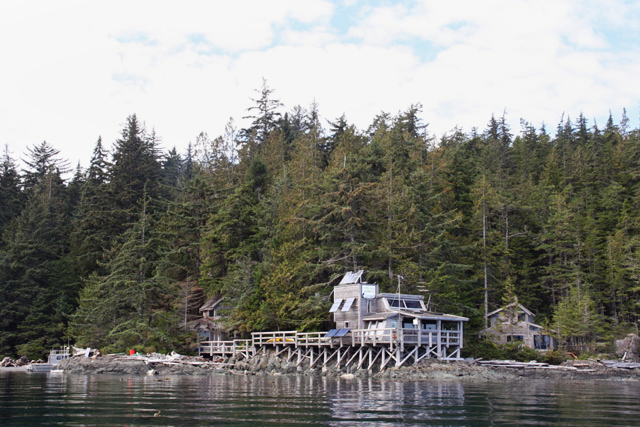
The work of OrcaLab is centered on the philosophy that it is possible to study the wild without interfering with lives or habitat. A network of hydrophones, positioned around the orcas' "core habitat," helps OrcaLab monitor their movements all year round. Supplementing the acoustic data are visual sightings of orcas as they pass OrcaLab, and reports from land observation sites staffed by OrcaLab volunteers during the summer "season," as well as reports from other researchers and whale watchers who share observations and information. Since 1994, OrcaLab has operated a video monitoring station on Cracroft Point in Johnstone Strait that allows the unobtrusive collection of both surface and underwater images of orcas and other ocean life. Beginning in 2000 and continuing through 2005, OrcaLab and Japan's NTT Data Corporation brought the everyday beauty of the orcas' lives to the Internet via www.orca-live.net. Plans for this project now include creating a production studio in a new operations base in Alert Bay. This will monitor and control a network of video cameras, enabling OrcaLab to bring live imagery as well as live sounds to a worldwide audience via the Internet. OrcaLab's work also includes vital conservation issues - preservation of orca habitat; release and rehabilitation of captive cetaceans, especially Corky; and bringing to an end the dismal era of commercial whaling. Dr. Paul Spong and Helena Symonds are great advocates not just of land-based whale research, but also land-based whale watching. The Pacific Whale Watch Association is honored that they have entrusted us with their sound counsel as we continue to draft and modify our Best Practices guidelines, to help our captains and crews reduce their footprint out there. Email:
PWWA Science Advisory Panel Members
Kenneth Balcomb III, BSc - Center for Whale Research
Ron Bates - Five Star Whale Watching
James Cosgrove, PhD - SpringTide Whale Watching & Eco Tours
Anna Hall, PhD - AECOM; Prince of Whales Whale Watching
Andrea Powell Hardaker, MSc - Wild Whales Vancouver
Jeanne Hyde - Maya's Westside Whale Charters
Joan Lopez, BSc - Vancouver Whale Watching
Capt. Trevor Neufeld, MSc - Five Star Whale Watching
Prof. Robert Otis, PhD - Ripon College, WI
Paul Spong, PhD - Director, OrcaLab
Helena Symonds - Director, OrcaLab
Capt. Michael Colahan - Captain/Naturalist for Island Adventures, Wildlife Photographer for Pictures Pangea
Wilma Fuchs - Naturalist/Deckhand for Prince of Whales Vancouver, Writer/Editor of Prince of Whales Naturalist Training Manual
Capt. Anthony Kaulfuss - Captain/Naturalist/First Mate for Prince of Whales, Sightings Data Coordinator with Vancouver Aquarium's Marine Mammal Unit
Michael Harris - Executive Director of PWWA, Contributing Producer/Wildlife Specialist for ABC News, Writer/Editor of Popular Science (Discovery)
Tasli Shaw - Naturalist/Educator for Steveston Seabreeze Adventures, Wildlife Photographer/Artist
Heather MacIntyre - Naturalist/Educator for Maya's Legacy Whale Watching. Wildlife Photographer
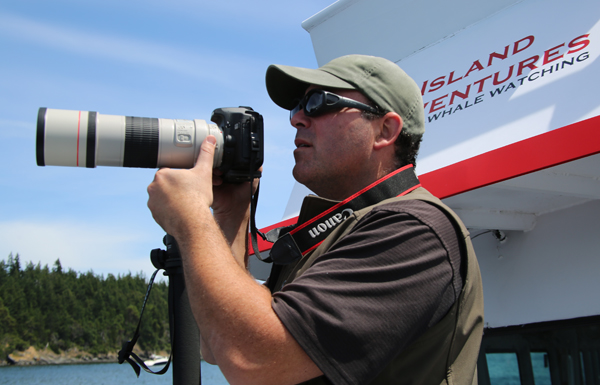
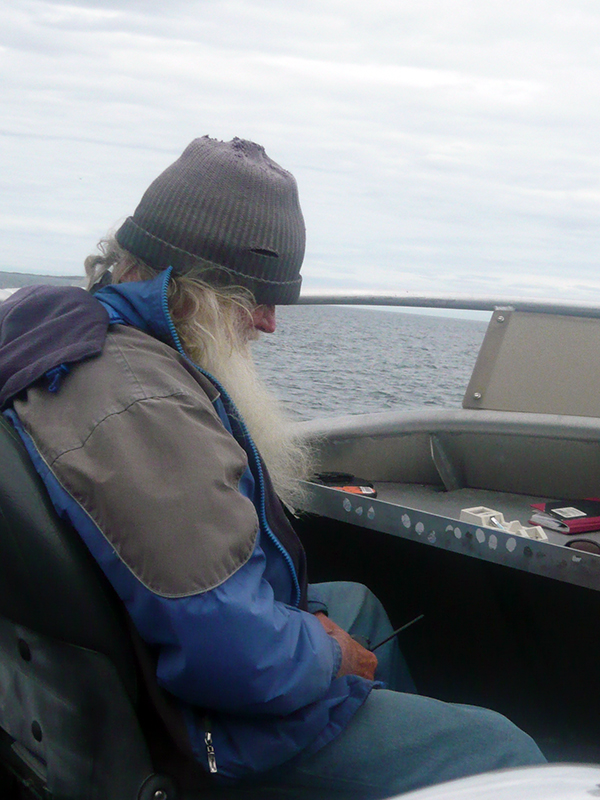
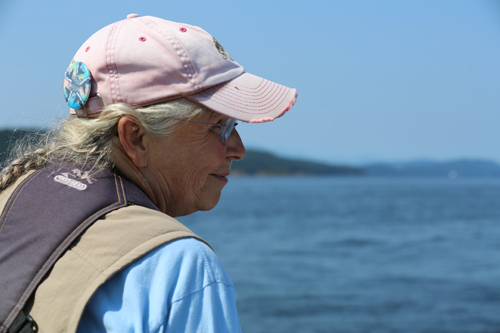
(l-r) Capt. Michael Colahan of Island Adventures; Naturalist/Researcher and Veteran Whale Spotter Ron Bates of Five Star Whale Watching; Naturalist/Researcher Jeanne Hyde of Maya's Westside Whale Charters.